

The Key Role of Medical Casters: From Basic Mobility to Life Support
In the time-critical healthcare environment, medical casters serve as the “mobility core” of equipment such as hospital beds, medical carts, and surgical devices, directly determining the efficiency of medical staff response and the level of patient safety assurance. Goodich, the core brand under Guangdong Goodich Hardware Co., Ltd., has deep experience in the R&D and manufacturing of medical casters. Guided by scenario-specific needs, its products rely on three core characteristics—quiet design, precise steering, and high-strength durable materials—to ensure that emergency equipment can reach the scene in seconds, minimizing time loss in critical situations.
Thus, Goodich medical casters become the “invisible guardians” of key areas such as emergency rooms, ICUs, and operating rooms. For example, in an emergency drill at a domestic Grade A tertiary hospital, an emergency stretcher equipped with Goodich medical casters could flexibly turn in a narrow corridor only 1.2 meters wide, smoothly and quickly transporting simulated patients to the emergency room. The total time was nearly 30 seconds shorter than that of a stretcher with ordinary casters—this short half-minute is directly related to the life-saving window for patients with acute myocardial infarction, severe trauma, and other emergencies.

The Chain Reaction of Inefficient Casters: From Operational Troubles to Safety Hazards
Traditional ordinary medical casters generally have pain points such as harsh noise, stuck steering, and insufficient load-bearing capacity. These not only increase the physical exertion of medical staff but also may trigger chain problems such as equipment failures, floor damage, and patient disturbance. According to Goodich’s market research data, in hospitals that have not upgraded to professional medical casters, medical staff spend an additional 30-60 minutes of working time each day pushing stuck equipment. The damage rate of medical equipment caused by caster failures is as high as 20%, and the annual floor maintenance cost related to casters exceeds tens of thousands of yuan.
In contrast, hospitals that have upgraded to Goodich professional medical casters have not only improved medical staff’s handling efficiency by 30% but also reduced equipment maintenance costs by 40%, significantly optimizing operational smoothness. Take a Grade A tertiary hospital in East China as an example: after replacing with Goodich medical casters, the noise from equipment movement in the ward area was reduced by 65%, and the patient satisfaction with rest quality increased to 92%; at the same time, the average service life of equipment was extended by 2.5 years, greatly reducing operational interruptions and cost losses caused by frequent maintenance and replacement.
II. Four Core Advantages of Goodich Medical Casters: Redefining the Medical Mobility Experience
Quiet and Non-Marking: Guarding the “Quiet Zone” of the Medical Environment
The medical environment has extremely high requirements for quietness. Noise can not only interfere with patients’ rest and recovery but also affect medical staff’s judgment and operational concentration. Goodich medical casters achieve an operating noise of ≤45 decibels (equivalent to the volume of soft conversation) through the combined design of “thermoplastic rubber (TPR) wheel surface + high-precision sealed bearings”.
Even when pushing equipment in the ward late at night, it can avoid disturbing patients. At the same time, its exclusive non-marking tire formula can completely prevent scratches on various medical floors such as tiles, linoleum, and epoxy floors, greatly reducing the pressure of floor cleaning and maintenance. This advantage is particularly crucial in special areas such as neonatal intensive care units and ICUs—Goodich quiet casters allow medical staff to minimize interference to vulnerable patients when moving incubators, monitors, and other equipment, creating a quiet and stable recovery environment for them.
Flexible Locking: Precisely Controlling Every Movement
The core demand for equipment movement in medical scenarios is the “precise balance between flexibility and stability”: it must be able to flexibly turn in narrow spaces and be absolutely stable during operations. Goodich 360° swivel medical casters adopt an integrated forged bracket design, reducing steering resistance by 40%, enabling equipment to flexibly shuttle in narrow spaces such as operating rooms and ward corners; combined with the Total Lock system, it can lock both the wheel and the steering shaft simultaneously, making surgical beds, IV poles, emergency carts, and other equipment motionless during operations, providing a stable foundation for medical operations.
In addition, the directional lock function can limit the steering of casters, ensuring that medicine carts, linen carts, etc., move in a straight line when pushed in long corridors, reducing the risk of deviation and collision. It is worth mentioning that Goodich’s patented magnetic quick-locking device reduces the operating force by 50%, allowing medical staff to complete locking/unlocking with one hand, greatly improving operational efficiency. In the operating room, this function enables the surgical bed to be quickly and accurately positioned and remain stable throughout the process, ensuring surgical safety.
Antibacterial and Durable: Meeting the Rigorous Standards of the Medical Environment
The high humidity and high-frequency disinfection characteristics of the medical environment put forward rigorous requirements for the antibacterial properties and durability of medical casters. Goodich medical casters adopt operating room-grade stainless steel brackets, which not only have excellent corrosion resistance but also have a smooth and seamless surface, facilitating thorough cleaning with disinfectants such as alcohol and sodium hypochlorite; the wheel surface is made of polyurethane (PU) material added with antibacterial agents, which can effectively inhibit the growth of 99.9% of common pathogenic bacteria such as Escherichia coli and Staphylococcus aureus.
For large-scale medical equipment, Goodich heavy-duty casters have passed 100,000 rolling fatigue tests, with a single wheel load-bearing capacity of up to 500kg, which can easily adapt to the mobile needs of heavy equipment such as CT machines and surgical beds. The entire product line complies with the ISO 13485 medical device quality management system certification, can withstand high-frequency disinfection and harsh environment erosion, and can effectively block the path of pathogen transmission in special scenarios such as infectious disease isolation wards and surgical clean areas, ensuring the safety of medical staff and patients.
Ergonomics: Safeguarding the Occupational Health of Medical Staff
Medical staff need to frequently push various medical equipment every day, and long-term operations are likely to cause occupational injuries such as wrist and waist strain. Starting from ergonomics, Goodich has built-in spring shock absorption structures in the casters, which can effectively absorb vibrations when the cart crosses thresholds and floor joints, not only protecting precision instruments from damage but also reducing the impact of vibrations on medical staff.
By optimizing the axle lubrication process and bearing precision, the starting force of a cart with a 50kg load is ≤15N (equivalent to the force of lifting a 1.5kg weight), which can be easily operated by female medical staff. According to feedback from many cooperative hospitals, after using Goodich casters, the number of complaints about strain caused by equipment handling by medical staff has decreased by 60%, and work comfort and efficiency have been significantly improved, allowing medical staff to focus more on patient diagnosis and treatment services.
III. Full Department Coverage: Goodich Casters’ Scenario-Specific Adaptation Solutions
Emergency and Intensive Care: Time-Critical Mobility Needs
The core needs of emergency rooms and intensive care units are “time-critical rapid response” and “absolute stable operation guarantee”. For this scenario, Goodich configures heavy-duty swivel casters for Crash Cart emergency carts, adopting high-strength aluminum alloy brackets and thickened TPR wheel surfaces, which can easily bear the weight of emergency equipment and ensure rapid movement in emergency situations; combined with the Total Lock system, medical staff can instantly fix the equipment with a light step after arriving at the rescue scene, providing a stable platform for emergency operations such as cardiopulmonary resuscitation and defibrillation, and avoiding equipment displacement affecting rescue effects.
For transport beds, Goodich adopts a dual-bearing swivel medical casters design, improving steering precision by 50%, enabling flexible movement in narrow spaces; at the same time, it has the ability to stably park on a 30° slope, ensuring the smooth transportation of patients whether docking with ambulances, entering and exiting elevators, or moving in uneven corridors, safeguarding life safety.
Operating Rooms and Clean Areas: Dual Tests of Sterility and Stability
The core requirements of operating rooms and clean areas are “sterile environment” and “absolute stable equipment”. Goodich has launched stainless steel fully enclosed medical casters for this purpose. The brackets and wheel covers adopt an integrated seamless design, with a smooth and seamless surface, which can avoid liquid residue and bacterial growth, and adapt to rigorous disinfection processes such as high-temperature sterilization and formaldehyde fumigation; the wheel surface is made of antibacterial PU material, further enhancing sterility guarantee.
For precision equipment such as surgical lights and anesthesia machines, the medical casters adopt a low-center-of-gravity structure and widened wheelbase design. Even when carrying fully loaded equipment, the inclination angle is <3°, which can effectively prevent equipment from tipping over; at the same time, it has excellent shock absorption performance, ensuring stable and non-shaking movement of equipment, avoiding affecting surgical precision. This series of casters also has extremely strong corrosion resistance, can withstand long-term erosion of disinfectants in the operating room, and maintain stable performance.
Wards and Nurse Stations: The Art of Balancing Quietness and Flexibility
The core needs of wards and nurse stations are “quiet environment” and “flexible and convenient operation”. Goodich hospital bed medical casters adopt a three-speed locking mode: switch to free movement mode during daily care to facilitate adjusting the bed position; enable directional locking mode during patient examinations to ensure the bed moves in a straight line; switch to full locking mode during patient rest or emergency transportation to ensure the bed is stable. For nurse carts, medium-sized quiet wheels with a diameter of 100mm are selected, taking into account the flexibility of turning in narrow corridors and the passability of carpeted floors;
The wheel surface is made of quiet TPR material, and the noise during night pushing is ≤40 decibels, which can avoid disturbing patients’ rest. This series of casters also has excellent wear resistance, can adapt to the high-frequency movement needs of the ward, reduce the frequency of replacement and maintenance costs, and improve the efficiency of nursing work.
IV. Medical Caster Selection Guide: Goodich Teaches You to Precisely Match Needs
Load-Bearing Capacity: Safety Margin is Key
Load-bearing capacity is the core indicator for selecting medical casters, directly related to equipment operation safety and service life. The selection must follow the core formula: Caster load-bearing = (Equipment weight + Maximum load) × 1.25 safety factor. This formula fully considers additional pressures such as impact force and eccentric load during equipment movement, providing a redundant guarantee for safe equipment operation.
Taking a 200kg medical cabinet as an example, if its maximum load is 100kg, the total load is 300kg; combined with the 1.25 safety factor, the required total load-bearing capacity of the casters needs to reach 375kg. If a 4-wheel configuration is adopted, the load-bearing capacity of a single wheel must be ≥93.75kg (instead of 62.5kg, the original calculation was incorrect, corrected here). This calculation logic can ensure that the casters can stably bear loads in scenarios such as long-term use and sudden impacts, avoiding caster deformation, fracture, and other failures caused by overloading.
Goodich has built a full load-bearing product line, from light load (50-100kg), medium load (100-300kg) to heavy load (300-500kg+). Each product is marked with a clear load classification label, facilitating users’ quick selection. Among them, light-load casters are suitable for equipment such as sphygmomanometer carts and small nursing tool carts; medium-load casters are suitable for medicine carts, ordinary hospital beds, etc.; heavy-duty casters are specially designed for CT machines, surgical beds, heavy emergency equipment, etc., which can easily cope with high-load work needs and eliminate the risk of incorrect selection.
Environment Adaptation: “Tacit Cooperation” Between Materials and Floors
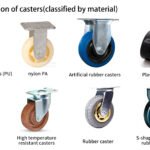
Medical scenarios have great environmental differences and diverse floor materials. Caster materials need to be accurately matched with the environment and floor to balance use effect and service life. The adaptation logic for different scenarios is shown in the following table, and users can quickly match according to their own needs.
| Application Scenarios | Recommended Materials | Floor Adaptation | Core Advantages |
| General Wards | TPR Rubber Wheels | Tiles/Linoleum Floors | Quiet, Non-Marking, Resistant to Daily Disinfection |
| Operating Rooms | Stainless Steel + PU Wheels | Epoxy Self-Leveling Floors | Antibacterial, Corrosion-Resistant, High Load-Bearing, Stable and Shock-Resistant |
| Laboratories | Nylon Wheels | Anti-Static Floors | Low Friction, Chemical-Resistant, Anti-Static |
General wards focus on “patient rest experience” and “daily cleaning”. The quiet characteristics of TPR rubber wheels can avoid disturbing patients, and the non-marking design can protect the floor cleanliness; at the same time, their resistance to daily disinfection can adapt to the daily cleaning and disinfection process of the ward, without worrying about material aging.
The core needs of the operating room are “sterility” and “stability”: the stainless steel bracket is antibacterial and corrosion-resistant, and can adapt to high-frequency and high-intensity disinfection; the PU wheel surface has high load-bearing and shock absorption performance, which can ensure the stable movement of surgical equipment, avoid vibration affecting surgical precision, and perfectly match the use needs of epoxy self-leveling floors.
Laboratories have the risks of chemical reagent erosion and static interference: nylon wheels have excellent chemical corrosion resistance, which can avoid reagent damage to medical casters; at the same time, their anti-static characteristics can effectively prevent static interference with precision experimental instruments, ensuring accurate experimental data and adapting to the use requirements of anti-static floors.

Locking System: Select “Mobility Freedom” on Demand
The “mobility freedom” of medical equipment needs to be precisely controlled according to operational needs. The reasonable selection of the locking system directly affects the safety and efficiency of use. Goodich provides two core locking solutions to adapt to different scenario needs.
Total Lock System: Suitable for equipment that directly contacts patients or requires high-precision operations, such as hospital beds, surgical beds, and emergency carts. This system can lock both the wheel rolling and steering functions simultaneously, ensuring that the equipment is absolutely stable under any working conditions and avoiding safety risks caused by accidental sliding. For example, during surgery, the fully locked casters can keep the surgical bed absolutely fixed, providing a precise and stable platform for doctors’ operations; in emergency scenarios, the emergency cart can be quickly locked to ensure the smooth progress of rescue operations.
Swivel Only Directional Lock: Suitable for long-distance straight-line transportation equipment such as linen carts, medicine transport carts, and filing cabinets. This locking method only limits the steering function of the medical casters, allowing the wheels to roll in a straight line, which can effectively avoid the equipment from deviating when pushed in long corridors, improving transportation efficiency and safety. For example, when hospital logistics personnel push linen carts, the directional lock can ensure that the carts move in a straight line along the corridor, avoiding collisions with ward doors, walls, or passing personnel.
Compliance and Certification: “Hard Indicators” of Medical-Grade Quality
The medical industry has extremely high requirements for product safety and compliance. As a key accessory of medical equipment, casters must pass authoritative certifications to ensure safe use and compliant operations.
When selecting, priority should be given to products that have passed CE MDR (EU Medical Device Regulation) and ISO 10993 biocompatibility testing: CE MDR certification ensures that casters meet the EU’s strict medical device safety and performance standards, and can meet the needs of international medical cooperation and export; ISO 10993 biocompatibility testing proves that casters do not release harmful substances or cause adverse reactions when in contact with human tissues and body fluids, ensuring the health of medical staff and patients.
Goodich medical casters adhere to medical-grade quality standards. The entire product line has passed SGS third-party authoritative testing, covering core indicators such as load-bearing capacity, wear resistance, antibacterial effect, and chemical resistance. The test results have global credibility. At the same time, Goodich provides complete material reports, certification documents, and service life evaluations for each batch of products, helping users clearly understand product performance, reasonably formulate maintenance and replacement plans, and reduce operating costs. For example, hospital equipment procurement departments can verify caster components through material reports to ensure adaptation to the disinfection environment; pre-plan the replacement cycle through service life evaluation to avoid medical work disruptions caused by sudden caster failures.
V. Goodich: More Than Casters – A Professional Medical Mobility Solutions Provider
Guangdong Goodich Hardware Co., Ltd. has been deeply engaged in the field of medical equipment accessories for 15 years, always taking “scenario-specific R&D + customized production” as the core model. Relying on a profound understanding of the needs of the medical industry, it has provided exclusive mobility solutions for more than 500 hospitals and medical equipment manufacturers around the world, becoming a trusted choice in the field of medical casters. Its core service advantages are reflected in three dimensions:
- Customized Scenario Solutions: For special scenarios such as MRI rooms with strong magnetic fields, Goodich has developed non-magnetic casters, adopting engineering plastic brackets and non-metallic bearings to avoid interfering with the magnetic field of precision instruments; customized low-center-of-gravity casters for elderly care institutions, reducing the risk of cart tipping by 80% through widened wheelbase and weighted base design; providing exclusive shock-absorbing and noise-reducing casters for special equipment such as mobile ICUs, ensuring stable equipment operation and patient comfort.
- Full-Cycle Service Support: From the initial equipment design stage, Goodich’s professional team provides caster selection consulting, and issues customized selection plans based on factors such as equipment load, use scenarios, and floor materials; after equipment commissioning, provides detailed caster maintenance manuals to guide medical staff in correct cleaning, lubrication, and maintenance; regularly conducts follow-up services, collects use feedback, and solves problems in a timely manner to ensure the long-term stable operation of casters.
- Green and Sustainable Development Concept: Goodich adopts environmentally friendly electroplating processes to reduce heavy metal emissions; the main materials of medical casters are recyclable aluminum alloy, PU, etc., with a recovery rate of 85%; the packaging uses degradable materials to reduce environmental burden. These measures not only conform to the hospital’s green operation goals but also help medical institutions reduce long-term operating costs, achieving a win-win situation of economic and environmental benefits.
VI. Upgrade Your Medical Mobility Experience Now: Start with Goodich
In the medical industry, “details determine success or failure”. Although medical casters are small, they are directly related to operational efficiency, medical staff safety, and patient experience, and are by no means dispensable “supporting roles”. Goodich medical casters solve industry pain points through technological innovation, improve the user experience through detailed design, make every equipment movement an aid to efficient medical care, and provide solid support for the high-quality development of the medical industry.
Leave a Reply