

Industrial Caster Buying Guide — Real Answers from a Caster Manufacturer
Most Industrial Caster FAQ pages you’re gonna read the internet are written by marketing people that have never been on a factory floor. They tell you what a swivel caster is, list five types of wheel materials, and call it a guide. That’s not what an industrial buyer needs.
We make casters. Goodich operates Industrial Caster manufacturing lines in China serving industrial customers in the Middle East, South America, and more — substantial orders, authentic specifications, genuine after-sales commitments. Below are a few of the questions that come up in emails, WhatsApp messages and procurement calls we field every week from cabinet manufacturers, warehouse equipment OEMs, hospital cart producers and material handling distributors.
A word to the wise before you read: if you are just buying four casters for a shop cart at home, this page may be telling you more than you want to know. And if you’re buying 5,000 casters for an OEM contract, and you want to know if a Chinese manufacturer can hold tolerance on 200mm cast iron wheels under full load, by all means keep reading.
Load capacity and weight calculaion
How do I figure out the weight capacity for my Industrial Caster?
The formula every buyer should know:
You divide by (N − 1) not by N. The reason: there are only three of four Industrial Caster bearing weight at a time on uneven surfaces. Assuming all four share the load is what causes bent stems in six months in warehouses.
The safety factor varies by use case:
- Stationary, or low speed manual movement: 1.3×
- Frequently moved manual carts: 1.5×
- Powered tow lines or AGVs: 2.0× or more
- Shock loading (loading docks, rough floors): 2.5×
- Example: A 400 kg cart is carrying a payload of up to 600 kg around manually on four Industrial Caster in a warehouse.
You will require Industrial Caster with a dynamic load rating of at least 500 kg per caster – not 250 kg that would be the result of the calculation “1,000 kg ÷ 4”. This single miscalculation is what causes most premature caster failures.
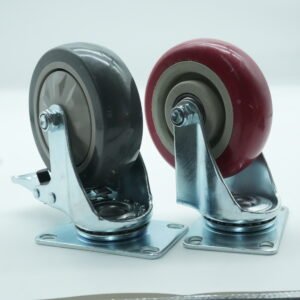
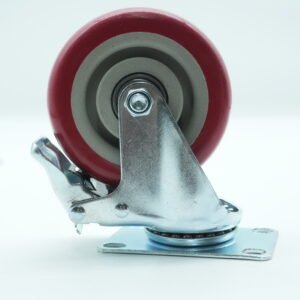
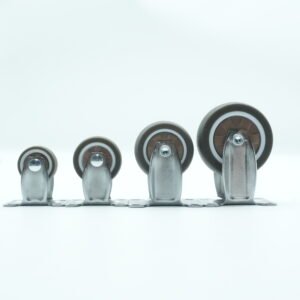
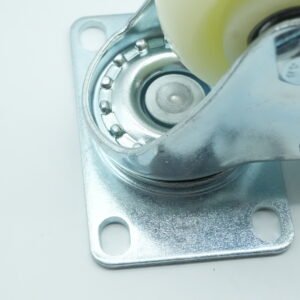
Do I really have to add a safety factor to the manufacturer’s load rating?
Yes. Always. Three reasons:
Dynamic vs static load. Manufacturer ratings are generally predicated on slow, smooth rolling on flat depth surface. Actual warehouses have expansion joints, dock plate, and debris.
Shock loads spike to 2–3× static load. A cart mounting a 5mm threshold at walking speed generates a shock load substantially greater than the steady-state weight.
Wheel material derates over time. Polyurethane has lost charge capacity as it gets older. Rubber does not lose charge capacity.
Our standard advice to bulk buyers: spec casters that are rated 30–50% higher than what you calculated. The dollars per caster difference is usually $ a few. The price tag for caster failure across a fleet of 500 carts is in the six digits.
How does weight distribution affect single caster load?
If a load on a cart is off-center, then the heavy side Industrial Caster take more than their equal share. A forklift dropping a pallet on one end of a cart can momentarily put two casters - out of four – 70–80% of the load. Consider the uniform load distribution when you spec, or ask whoever is loading the carts to do the same.

What happens if Industrial Caster aren’t strong enough?
Failure progression in order: wheel collapse → bearing failure → stem bending → bracket weld failure. Visual cues are usually flat spots on the wheel or a wobble in the swivel. By the time the bracket breaks, the Industrial Caster has been snapped in half for months. Replace at the first sign of wheel deformation — it’s much cheaper than the downtime.
How much is the loading capacity difference between swivel and rigid caster?
Rigid casters have a 15-25% higher load carrying capacity than swivel casters on the same wheel and bearing. The swivel mechanism also adds additional stress points. At a four caster cart, the “standard” seems to be two rigid + two swivel — load the rigLight, medium, and heavy duty — What do these terms actually mean? There are no universally accepted definitions, but the consensus definitions that are widely used in the industry include:
- Light duty: up to 100 lb per caster — retail displays, office furniture, light tool carts
- Medium duty: 100 to 300 lb per caster — shop carts, light warehouse trolleys, catering
- Heavy duty: 300 to 800 lb per caster — factory carts, warehouse equipment, machinery moving
- Extra heavy duty: 800 kg+ per caster — die handling, aerospace tooling, foundry equipment
Goodich makes in all four categories, but our largest volume export orders are medium and heavy duty — those are where the Middle East and South American distributors get the most re-order business.
Selection of Wheel Material
What Industrial Caster wheel material should I select?
An honest answer: It is dependent on which type of floor, load, environment, and noise that you tolerate. Here’s the guideline we are sending to buyers:
| Wheel material | Load capacity | Floor protection | Noise | Best for |
|---|---|---|---|---|
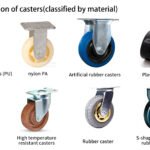
| Polyurethane (PU) | High | Excellent | Quiet | Most industrial use — our best-seller |
| Nylon | Very high | Poor (marks floors) | Loud | Heavy load on smooth concrete |
| Cast iron | Extreme | Damages floors | Very loud | High-temperature, foundry, oven racks |
| Rubber | Low-medium | Excellent | Very quiet | Hospitals, hotels, libraries |
| Phenolic | High | Fair | Moderate | High-temp, chemical environments |
| TPR (thermoplastic rubber) | Medium | Good | Quiet | Medical, food service |
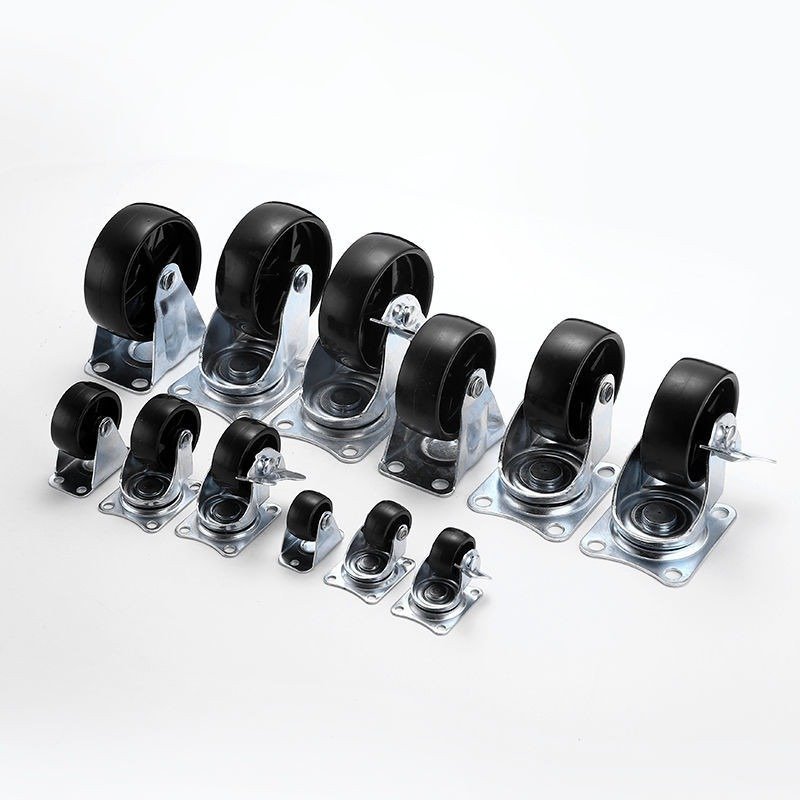
What are the advantages and disadvantages of polyurethane Industrial Caster wheels?
PU industrial caster are the norm, for a good reason:
Pros: high load capacity (typically from 300 to 800 kg), does not grease floors, rolls quietly, resistant to oil or grease, has shelf life of 3 to 5 times greater than rubber when under load.
Disadvantages: the price is higher than for nylon or rubber, can form flat spots if left stationary loaded for a long time, wears faster in wet conditions of use (instead use TPR or special waterproof grades of PU).
For Middle East customers who ship items into their hot warehouses, we advise high-temperature PU types which can maintain load capacity at 80°C. Standard PU is softened at temperatures above 60 °C.
How good is wear resistance of nylon?
Nylon wheels can handle more weight at the same diameter than PU wheels, and they achieve this at a much lower price. The trade off is that since nylon is hard it brings up every imperfection in the floor through the cart as noise/vibration, and it will scratch or etch softer floors. Use nylon on sealed concrete, not tile or epoxy.
Are you concerned about the noise from running on rubber wheels — and the effect they will have on your floors?
Rubber is the most silent and the most friendly towards floors. The downside is capacity of wheel load (traditionally around 150–200 kg per wheel for standard rubber) and life term (rubber is getting compressed and wearing faster). Use rubber when noise should take precedence over throughput in hospitals, hotels, libraries, retail.
Cast iron wheels — when do you really need them?
Cast iron is used where other materials would break down:
Oven racks and bakery equipment (temperature in excess of 250°C)
Foundries and metal forging
Outside industrial applications with abrasive that slides
Cast iron is going to ruin your floor in a matter of days. If you’re buying cast iron Industrial Caster then you’re already resigned to the fact that the floor is a consumable.
How do I align wheel material with floor type?
Quick rule:
- Polished concrete or epoxy: PU or TPR (Keep Awya from nylon and cast iron)
- Sealed industrial concrete: PU, nylon, or cast iron work well
- Wooden or laminated floors: only rubber or soft PU
Outdoor / rough ground = pneumatic or large-diameter cast iron
Tile: rubber or TPR
Chemical resistance — what wheel material withstands what?
Standard guide for chemical environments:
- Oil and grease: PU (best), nylon (good)
- Acids and alkalis: phenolic, certain PU grades
- Solvents: phenolic (Don’t use regular PU) solate RedFeather )
- Water and steam: stainless steel brackets + waterproof PU or TPR
We have technical data sheets for each wheel grade for our chemical plant and food processing customers. Ask for the chemical compatibility chart when you submit your quote.
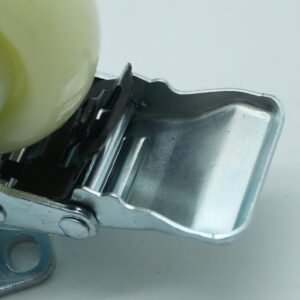
Swivel lock, total lock brake — what is the difference?
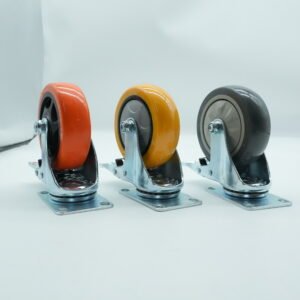
- Swivel lock: only the swiveling part is locked. The wheel still rolls. Used to keep a cart/U-boat straight down a long aisle.
- Wheel brake (=tread brake): Brake engages the wheel only. The swivel still rotates. For brief stops.
- Total lock: both the wheel and the swivel are locked. For resting equipment, hospital beds and anything that absolutely has to stay put.
If you are carrying people or heavy potientialy expensive kit, or in the uplands, put total lock on it.
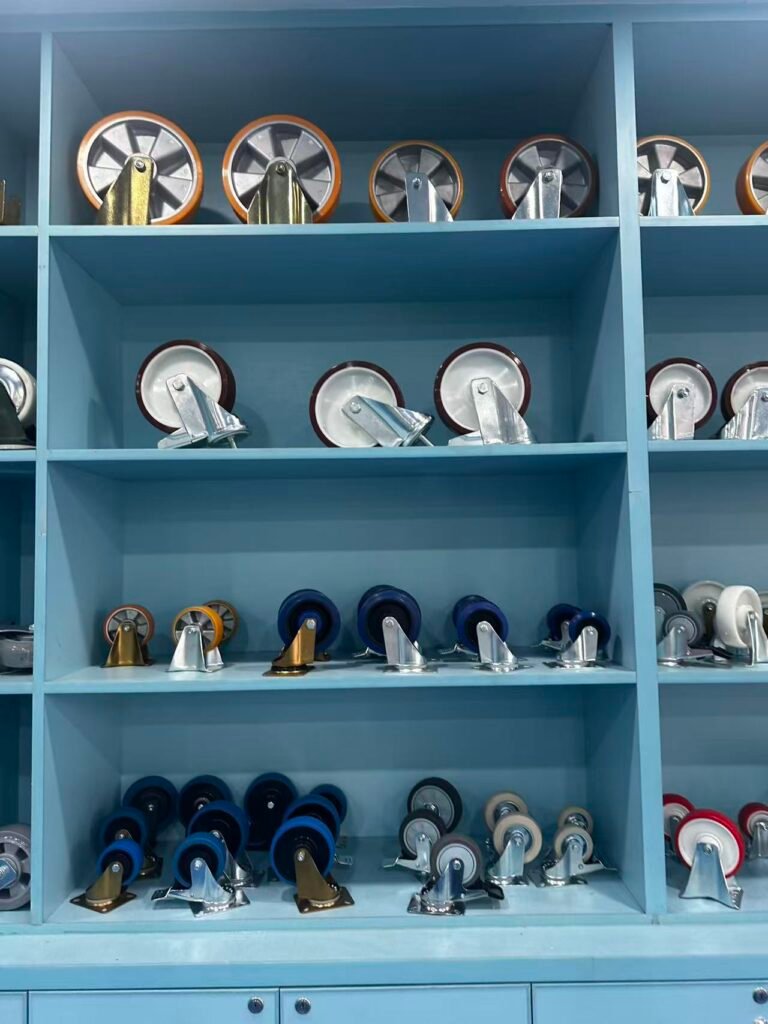
Swivel, Brakes and Mounting System
Swivel vs rigid caster: What’s the difference and when should you use one over the other?
Rigid casters have a fixed axis and cannot swivel. They bear more weight and run true. Swivel casters rotate 360° on a kingpin. They provide maneuverability, but they can hold slightly less weight and are harder to move initially.
Typical four-caster cart layout: a pair of rigid casters at one end, a pair of swivels at the other. The rigid end follows a big arc, the swivel end follows. Four swivel casters offer the ultimate in maneuverability, but the cart will be very difficult to push in a straight line — that’s fine for short jaunts, tiring for long stretches in a warehouse aisle.
Dual wheel vs single wheel – durability and performance benefits?
Dual wheel casters distribute the load over two thinner wheels on the same axle.
- Benefits of dual wheel: less rolling resistance, better swivel response (the two wheels rotate around kingpin on the same axis), more stable on rough terrain, less pressure on the ground per contact point.
- Pros of single wheel: greater per-unit load capacity, easier maintenance, lower cost.
Office chairs and lightweight medical equipment nearly always use dual wheel. Hefty industrial carts almost always use single wheel. Over 400 kg per caster, dual wheel becomes structurally inefficient.
Top plate, threaded stem, bolt hole – which do I use for mounting?
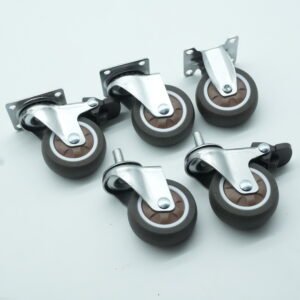
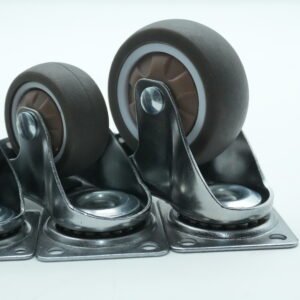
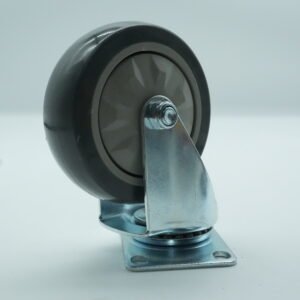
Mounting With Top Plate: a flat steel plate with four bolt holes. The best, most common automotive mounting. For anything over 150kg per caster.
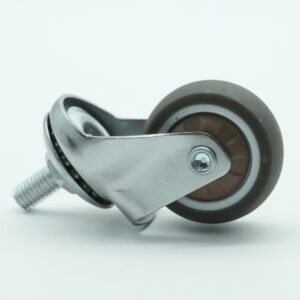
Threaded stem: one single threaded shaft that screws into the device. Traditional load capacity, faster installation. Popular with light furniture and retail.
Bolt hole (collapsing stem): a single hole through the device. Applied on tubular frames such as rolling racks and catering trolleys.
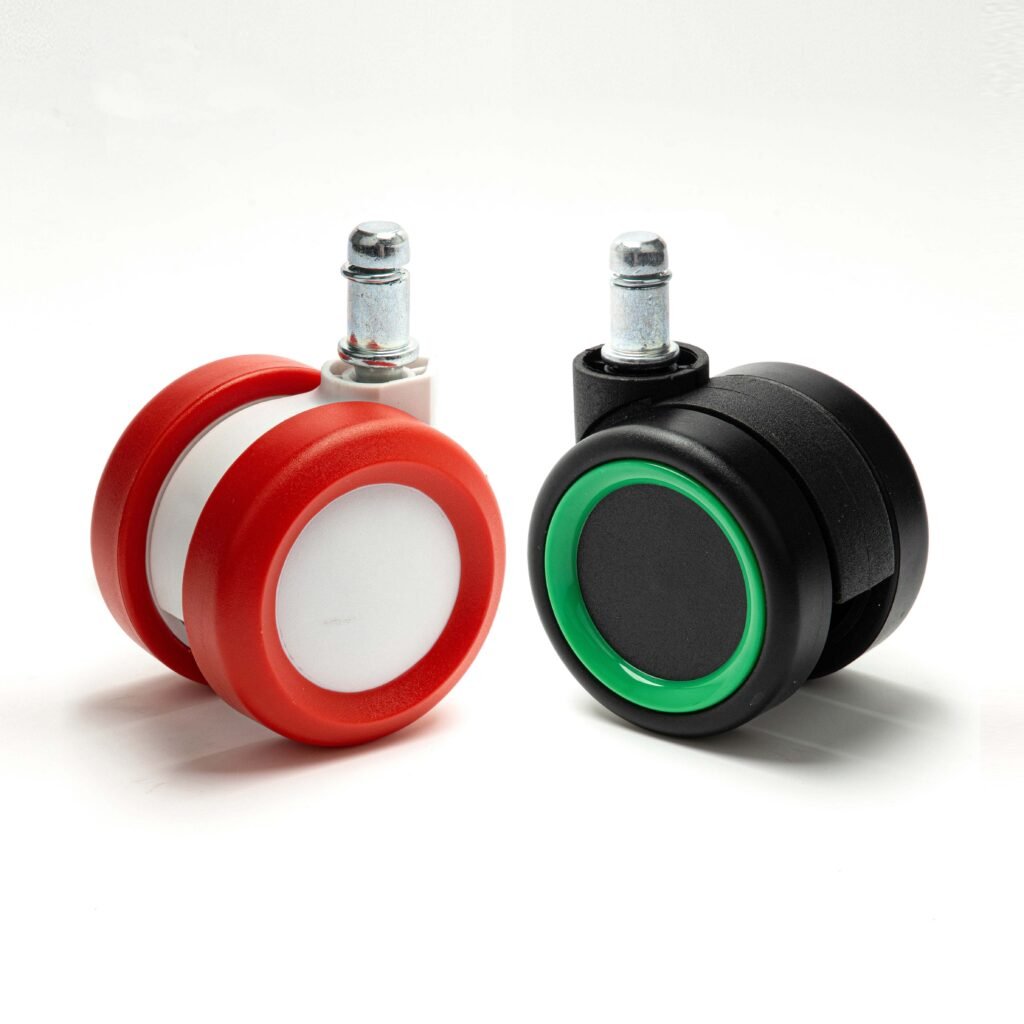
Grip ring stem: snaps into a socket. Used for office chairs and fainting couches.
Regarding if dual_wheel can exist in the text, what must be preserved for: Best profit margin: 2-3 wheel For OEM customers purchasing in volume, We standardize on top plate unless the application requires otherwise. Flip off plates are more manageable to examine, more manageable to substitute, and they don’t slacken like threaded stems under vibration.
What is offset swivel radius and why is it important?
Offset refers to the distance between the center of the kingpin (the vertical pivot) and the center of the wheel axle. With greater offset, the swivel will have more “leverage” to self-align as you push the cart – the wheel will move by itself to go straight.
So, a larger offset means easier swivel, easier initial push, but a little less load stability. Smaller offset = more stable heavy load, tougher to start moving.
For warehouse carts, the larger offset is almost always best. The effort to push is saved during an eight-hour shift you can add up the work.
How long do Industrial Caster and brakes last and can I replace them?
4 years, less in wash down or corrisive conditions. Brake replace:Procedure on replace of brake depends on type of brake – the Pedal brake can often be swap without remove the Industrial Caster, the Total-Lock system brake often need remove of caster.
Goodich carries replacement brake kits for all models we have manufactured in the last 8 years. Send us your original order reference, or a picture of the existing Industrial Caster and we will match the part.
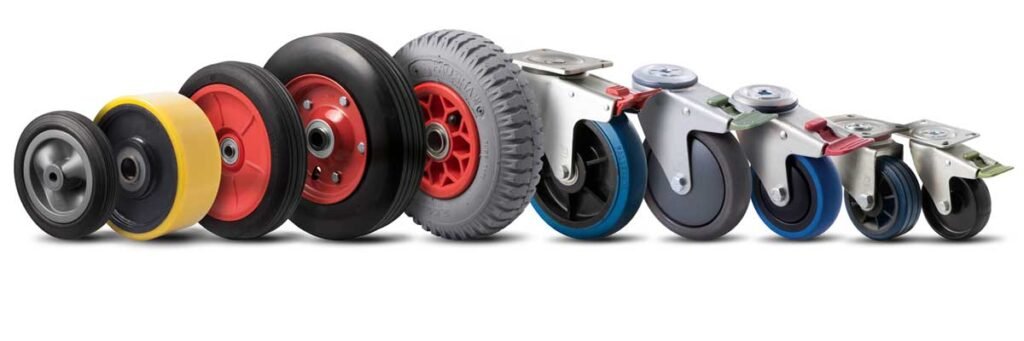
Industrial Caster for Sale
Application & Industry-Specific Selection
Top Industrial Caster for warehouses and factory floors?
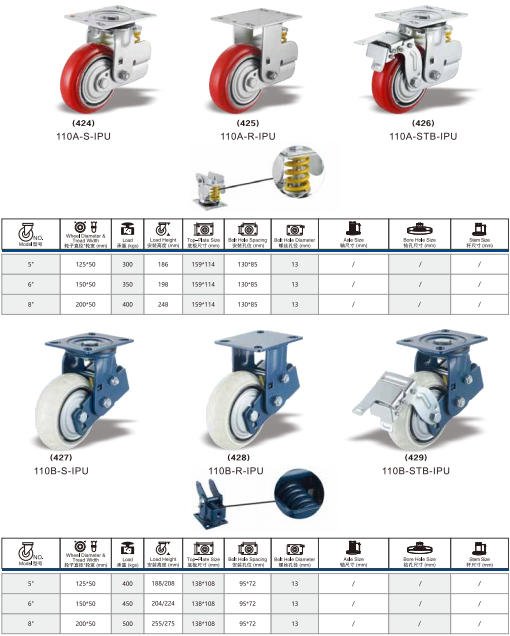
Heavy duty PU or nylon wheels with diameter size 150–200 mm mounting top plate, dynamic loading of 500–800 kg per caster. Add shock-absorbing springloaded brackets if you have dock plates, expansion joints, or AGV traffic.
Medical/hospital caster requirements?
Rolling silently is the priority — equipment is wheeled around by staff 24 hours. Standard TPR or soft PU wheels, dual-wheel design, total-lock brakes, stainless or chrome-plated brackets (for wash-down). 75-100 kg is what hospital cart casters usually need, warehouses don’t need such robust casters.
Anti-static / ESD casters for electronics workshops?
Electronics Manufacturer: Since electronics production requires conductive casters, these casters drain static charge that could build in the equipment to the floor. Resistance value is commonly 10⁴ to 10⁹ ohms. We do provide ESD certified Industrial Caster with test reports – essential paperwork for the majority of electronics OEM agreements.
High-temperature casters for ovens and bakery equipment?
Phenolic or cast iron wheels are the only wheels, which survive for continuous running up to 200°C. Cast iron is the only choice at 280°C+. Standard PU melts. The bearings should be high-temp grease packed – the moisture-based standard lithium grease evaporate and the bearing would seize in a matter of weeks.
Anti-explosion/hazardous environment Industrial Caster?
For ATEX or explosion proof environment, we have conductive wheels made of fiberglass with brass or stainless steel components that are spark resistant. This is a custom specification - order quantities and lead time will be increased. Provide with your inquiry the zone classification (Zone 1, Zone 2, Class I Div 2, etc.).
Are there food-grade Industrial Caster for catering and food processing?
Stainless steel brackets (304 or 316) and Non-Toxic, FDA approved wheel material • Sealed bearings to avoid contamination, Smooth surfaces with no traps for cleaning. Wash-down rated for daily sanitation cycles. Typical applications in slaughter houses, dairy factories, commercial kitchens.
Light casters for retail displays?
Rubber or soft PU, threaded stem installation, 50-75 kg per Industrial Caster are enough. Appearance counts — chrome or powder coated brackets, color-matched wheels for high-end retail brands.
Size, Pushing Force & Floor Adaptation
What size wheels should I get?
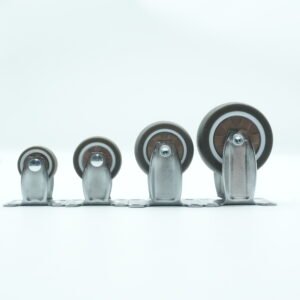
Larger-diameter wheels roll easier, better over obstacles, and last longer. Smaller wheels then save space and lower the entire cart height. Working guideline:
- 75–100mm: light furniture, retail, office
- 125–150mm: medium industrial carts, hospitality
- 150–200mm: heavy industrial, factory carts etc.
- 200–250mm+: extra heavy duty, AGV, outdoor
To make a rule: double wheel diameter, halve pushing force on the same surface. If your operators are complaining about cart pushing fatigue, bigger wheels are generally a quicker fix than retraining.
Large vs. small wheels — rolling effort comparison?
Under the same load on the flat and smooth ground, the startup force of a 100mm wheel is about 40% more than that of a 200mm PU wheel. This increases on rough terrain. For long warehouse aisles, or moves taken repetitively, the labor cost savings from the larger wheels recoup the price premium in a matter of months.
Hard floor vs uneven ground – differences in Industrial Caster selection?
Hard smooth floor: any wheel material works, smaller diameters acceptable
- Rough concrete with joints: larger diameter (150mm+), softer PU or rubber to absorb shock
- Gravel or off-road: pneumatic (air-filled) tires, 200mm+ diameter
- Combined indoor/outdoor: pneumatic or semi-pneumatic option
A 100mm wheel rolling over a 10mm floor joint at speed imparts a shock many times the static load up through the bracket. That same wheel at 200mm barely buzzes the joint. Wheel diameter is the least cost shock damper in your supply chain.
Is the width of a wheel important for load and movement?
Yes, but less so than diameter. Larger wheels spread the load across a larger contact area, and therefore exert less pressure on the floor and softer floors are less likely to be damaged. The trade-off: wider wheels resist swivel rotation more (More effort required to change direction). Typical industrial PU wheels are approximately 40–50mm in width. Only go wider if floor protection is a particular requirement.
What are some ways to decrease the amount of force required to push and pull heavy carts? Five time tested fixes, ordered by their potential impact:
Increase wheel diameter — biggest single improvement
Switch to PU from rubber or nylon — smoother roll
Use precision ball bearings rather than plain or roller steel bearings and/lubricate the bearing
Increase the offset the swivel is away from the stem (aka. easier startup)
Reduce the number of wheels from 6 to 4 if the load allows it: less wheels means less total rolling resistance
Warehouse handlers wondering about injury and fatigue among their workforces will find items 1 and 3 alone can reduce pushing force required by 50-60 percent.
Wear, Maintenance & Service Life
How long do industrial caster last?
It is reasonable to expect for normal use in industrial applications:
- Light duty, indoors: 5–8 years
- Medium duty in warehouse: 3–5 years
- Heavy duty, daily use: 2 to 3 years
- Extreme Conditions (high temp, wet, corrosive): 6 months to 2 years
Wheels usually fail before brackets. Again, if lubrication is ignored, bearings usually fail before wheels. If not loaded, trailer brackets last the life of your trailer.
How often do Industrial Caster Bearings need Lubrication?
Sealed precision ball bearings: lubrication is sealed in, replace when noisy. Re-grease for roller bearings every 6 months under normal use or every 3 months in dusty or wet environment. For bushings: Re-grease the bushings every 2 to 3 months or opt for sealed bushings.
Grease with a quality lithium type industrial grease. Use synthetic high temperature grease — regular grease melts over 120°C in high temp applications.
How do I test for wheel and bearing wear?
Five-minute monthly inspection checklist:
- Flat spots on wheels — wheel deformation from overload or rest load on the stationary
- Swivel wobble — kingpin or top bearing wears out
- Noise while rolling — worn bearing, lubrication needed
- Difficulty swiveling — debris in the raceway, or rust
- Weld Splits in Brackets — overload or impact damage
Either of these methods results in re scheduling. Bracket failure at 6 months is prevented by catching them at month 1.
Solutions for noisy or sticky swivel casters?
Most “swivel stuck” issues are debris (hair, string, wire) wound around the kingpin or packed in the swivel raceway. Take off the caster, clean the raceway, regrease, reinstall. If it still feels stiff, the raceway bearings are worn-out – replace the caster.
Loud rolling sound is almost always dry ball-bearings. If it hasn’t stopped rattling after lubrication in one week, the bearings are damaged badly inside – replace.
What can I do to increase service life on high capacity casters?
Five actionable tips:
- Buy rated 30% above calculated load at purchase
- Alternate patterns of loading the cart to even the wear on industrial casters
- Grease on a schedule, not at the first sign of trouble
- SCROLL DOWN TO CONTENT. SCROLL DOWN TO CONTENTTrain operators not to engage dock plates and curbs at high speed
- Argue small damage suffers immediately—a bent stem lets the bracket down in months
The largest single factor in a caster’s lifetime is not quality—it’s whether the cart is loaded properly and pushed smartly. Top-end European casters degrade in 18 months under abuse. Appropriately spec’d Chinese made casters survive 4+ years in reasonable use.
Procurement, Customization & After-Sales
Could a person customize the Industrial Caster?
Yes — this is mostly what Goodich makes. Typical customization options:
- Wheel diameter and width (50mm to 300mm+)
- Wheel material and hardness (Shore A or D rates to your specs)
- Bracket Finish (zinc plated / chromed / powder coated in your custom colors / stainless steel)
- Type of brake (brake swivel, total brake, brake side, brake pedal) / Brake type (Swivel lock, total lock, side brake, pedal brake)
- Installation (Custom top plate size, custom stem size and thread) / Installation (custom top plate dimensions, custom stem lengths and threads)
- Branding (laser etched logo on bracket for OEM customers)
Send us a drawing or spec sheet and we will quote to it. We will add 5-10 days to the standard lead time for customization; customization which requires tooling will add 2 to 4 weeks.
What is the minimum order for custom industrial caster?
Stock specs: no MOQ for trial, container qty for production
Colour or finish-customisation: MOQ 500-1 000 pcs
Tooling required for custom dimensions: MOQ 2,000-5,000pcs
Full custom designs: case by case discussions
Middle East and South American distributors are building inventory across numerous SKUs, so we combine mixed-spec orders into single containers — this is one of the reasons distributors in these markets work with us instead of buying piecemeal from Alibaba.
What’s your warranty policy?
Standard Goodrich Warranty
- 12 months from date of delivery against any manufacturing defects
- 24 months for excellence range (heavy duty industrial series)
- Bearing and swivel (vs. load-ratings) are under full warranty period.
- Wheel wear is not covered (they are consumables, wear rate depende on use)
- Damage caused by overloading, dropping or misuse not covered
Here’s what “covered” means in reality: we send you replacement units to your warehouse at our expense, with no obligation for you to return the defective Industrial Caster first. (High shipping) Middle East and South American distributors. requiring international return shipping for defect claims is just the after-sales friction that will push buyers to local suppliers] That’s not how we do it. Send us photos and your order reference — replacements shipped in less than 7 days.
Bulk order lead time?
- Stock products, single SKU: 7–15 days after order confirmation.
- Stock products, mixed SKU container: 15-25 days
- Customized specification:25-40 days.
- Fully customized with new tooling: 45-60 days
From Our Factory to: .
Middle East ports (Jebel Ali, Dammam, Sohar): 18-25 days by sea
South American ports (Santos, Buenos Aires, Callao, Cartagena): 35-45 days by sea
Air freight for urgent sample and small order
Lead time for bulk order?
stock product, single SKU: 7-15 days after receipt of order confirmed
Stock goods, mixed SKU carton: 15-25 days
Customized specifications: 25 to 40 days
Full Custom New Tooling: 45-60 Days
From our factory to :
Middle East ports (Jebel Ali, Dammam, Sohar): 18-25 days by sea
South American ports (Santos, Buenos Aires, Callao, Cartagena): 35-45 days by sea
Air Freight is available for urgent samples and small orders
We confirm the production schedule and shipping window with order confirmation and provide weekly updates. If a shipment will be late, you will hear from us before you ask.

Can I order replacement parts for older Goodich casters?
Yes. All Our castor designs remain available and we keep production tooling and component stock for at least 8 years from the last date of production for the particular caster. Send us the casters: If you have Industrial Caster on equipment that’s still in service, send us:
Reference to original order (if you have one),or
Multiple views photos of the existing Industrial Caster and the equipment it rests on
We will match the specification, quote replacements, and ship. For OEM customers who have engineered entire product lines around particular Goodich models, we save that spec in our system so that reorders five years out match exactly.
Why Goodich
We don’t pretend to be the most affordable Industrial Caster manufacturer in China. There are some (we know which) factories in Guangdong that will slash the price for 10 to 15% of ours. We compete on a different axis: the cost of after-sales failure on a 5,000-unit order is a multiple of the unit price savings.
For our distributors in Mexico,
Replacement units are shipped without a return of the defective Available parts for all production for 8 years Direct technical support during spec not just sales Mixed-SKU container consolidated for Distributor building their inventoryOrder Lead Time we Meet, and more~ proactively telling you if we can’ Hold to that Order Lead Time~] Dear Friends, The Order Lead of ours is 30 days basis to this point and 7-10 days for sample.
If you’re buying industrial caster by the container load and your supplier talk is stuck on price quotes like a tennis match, it’s likely we’re not the vendor for you. If you’ve been screwed over once by some Alibaba supplier who vanished after your second order, send us your spec — we’ll quote, and we’ll be here in five years when you want replacement parts.
Please send all specifications, drawings or photos to [your sales email], or contact us on WhatsApp [your number]. Technical inquiries are responded to within one business day.
Leave a Reply