

In the bustling world of food service, mobility is synonymous with efficiency. Whether you’re operating a vibrant food truck, managing a crowded cafeteria, or serving guests at an event, your food service cart is the backbone of your operation. It needs to be agile, reliable, and sturdy. However, one of the most critical yet often overlooked components that determine its performance is the humble castor wheel. Choosing the wrong set can lead to operational headaches, safety hazards, and increased costs. To ensure your cart moves as seamlessly as your service, here are five essential tips for selecting the best castors, with a special focus on the indispensable heavy duty castor wheel.
1. Accurately Assess the Total Load Capacity
The foremost consideration when selecting castors is understanding the weight they will bear. This isn’t just the weight of the empty cart; it’s the combined weight of the cart itself, all the equipment (ovens, coffee machines, chafing dishes), the food and beverages, and any other supplies.
Why it matters: Underestimating the load is a common mistake that leads to premature wheel failure, including broken axles, flattened wheels, and damaged bearings. A collapsing castor isn’t just an inconvenience; it can cause costly spills, create trip hazards, and bring your service to a grinding halt.
How to do it:
- Calculate the Total Weight: Weigh your fully loaded cart at its maximum capacity. If that’s not possible, calculate the weight of each item and add a safety margin for unexpected loads.
- Understand Load Capacity per Castor: The total weight is distributed among all the castors. For a four-caster cart, divide the total weight by four. However, this is a theoretical ideal. In reality, weight distribution is rarely perfectly even, especially when moving over thresholds or uneven surfaces. Therefore, always choose castors with a load rating that exceeds your calculated per-caster weight.
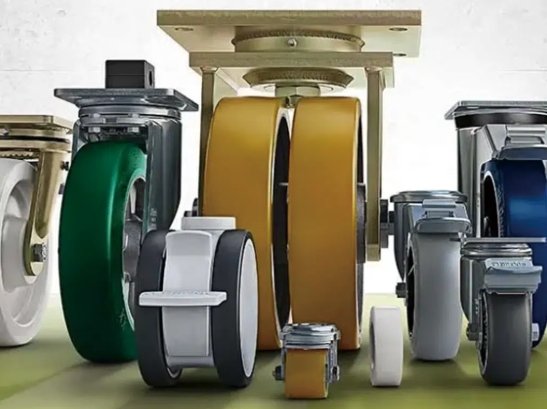
- The Role of the Heavy Duty Castor Wheel: For most food service carts carrying heavy equipment like commercial griddles or large beverage dispensers, a heavy duty castor wheel is non-negotiable. These castors are engineered with reinforced hubs, high-quality bearings (like roller or precision ball bearings), and robust swivel mechanisms to handle significant weights—often ranging from 150 lbs (68 kg) to over 500 lbs (227 kg) per wheel. Investing in a genuine heavy-duty system ensures longevity and reliability under constant, demanding use.

2. Match the Wheel Material to Your Flooring and Environment
The material of the wheel itself is the primary interface between your cart and the floor. Choosing the wrong material can damage your floors, create excessive noise, and make the cart difficult to push.
Why it matters: A wheel that is perfect for a concrete food truck floor might destroy a polished restaurant hardwood floor. Similarly, a wheel that works indoors may melt or crack when used on hot asphalt.
Common Wheel Materials for Food Service:
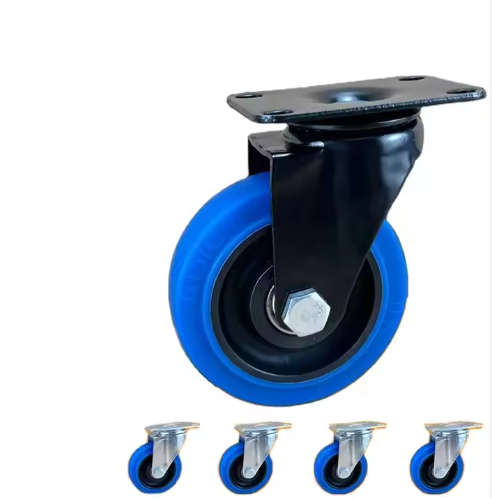
- Polyurethane (PUR): Often considered the gold standard for heavy duty castor wheels in food service. Polyurethane offers an excellent balance of hardness and resilience. It is floor-friendly, resisting marks and scuffs on most indoor surfaces, while also being highly durable, load-bearing, and resistant to oils, greases, and chemicals. It’s quieter than metal and provides good pushability.
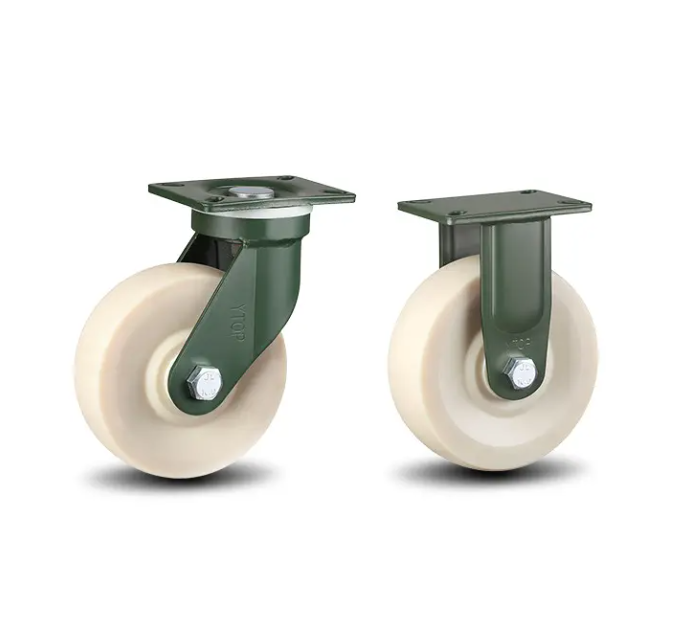
- Nylon: Extremely hard and durable, capable of withstanding very heavy loads. Nylon wheels are highly resistant to chemicals, abrasions, and extreme temperatures. Their downside is that they are very hard and can be noisy, potentially damaging soft flooring like vinyl or wood. They are ideal for rough outdoor surfaces or industrial kitchens with concrete floors.
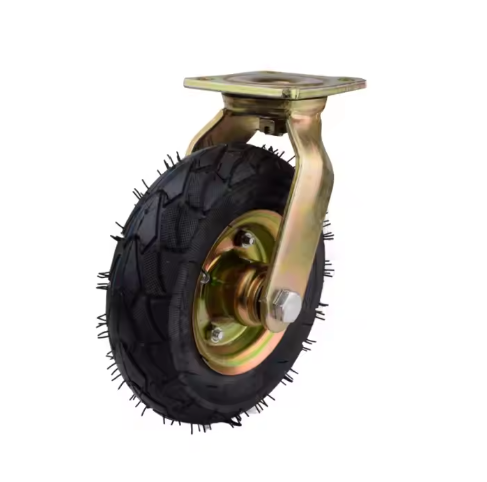
- Rubber (Solid or Soft Tread): Provides superior cushioning and shock absorption, making for a very quiet and smooth ride. They excel at protecting both the cart’s contents (e.g., delicate pastries) and delicate flooring. However, solid rubber can be heavier to push and may degrade over time with exposure to oils and extreme temperatures. Avoid pneumatic (air-filled) rubber wheels in food service as they are prone to punctures and flats.
- Thermoplastic Rubber (TPR): A popular, cost-effective alternative to polyurethane. TPR offers good floor protection and a relatively quiet ride but may not have the same longevity and load-bearing capacity as high-quality PUR.
- Polyolefin: A hard plastic wheel that is lightweight and resistant to corrosion and chemicals. It’s a good budget option for light-duty carts on smooth surfaces but is not suitable for heavy loads or rough terrain.
Pro Tip: For a cart that transitions between a commercial kitchen (smooth, possibly greasy floors) and an outdoor event (asphalt or concrete), a heavy duty castor wheel with a polyurethane tread and a robust nylon core offers the perfect combination of floor protection, durability, and load capacity.


3. Prioritize Maneuverability with the Right Swivel and Locking Features
A food service cart needs to be nimble. It must navigate tight corners, dodge busy staff, and be positioned with precision. This is where the swivel mechanism comes in.
Why it matters: A cart with four rigid castors is almost impossible to steer. A combination of swivel and rigid castors, or all swivel castors, is essential for maneuverability.
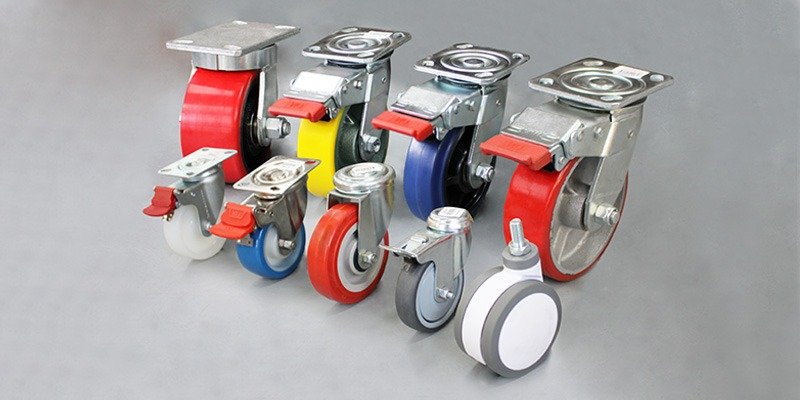
- Swivel vs. Rigid (Fixed): The standard configuration is two swivel castors and two rigid castors. The swivel castors (typically on the non-pushing end) allow for direction changes, while the rigid castors provide stability and track in a straight line. For maximum maneuverability in tight spaces, four swivel castors are the best choice, though they can be less stable when pushed in a straight line at high speeds.
- Swivel Mechanism Quality: For a heavy duty castor wheel, the swivel mechanism must be built to last. Look for kingpins with ball bearings or kingpin-less designs with precision raceways. These provide smoother rotation under load and prevent the “shimmy” or wobble that can occur with cheaper, bushing-based swivels.
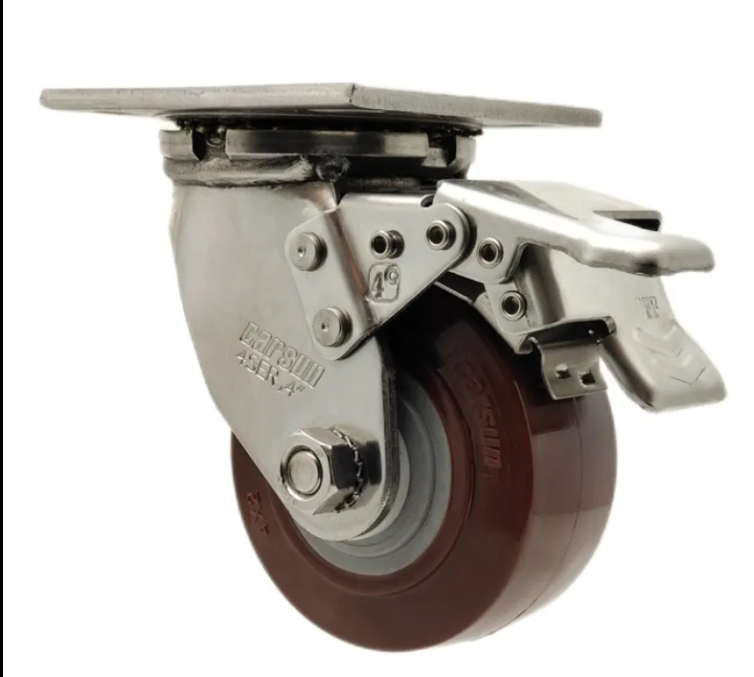
- Essential Locking Features: Safety is paramount. At a minimum, your castors should have a swivel lock (which locks the wheel in a straight position) and/or a wheel brake (which prevents the wheel from rolling). For carts on inclines or for tasks requiring absolute stability (like pouring hot liquids), a total lock—which engages both the swivel and the brake—is highly recommended. Ensure the brake pedal is large enough to be engaged with a foot, even when the cart is fully loaded.
4. Don’t Compromise on Hygiene and Cleanability
The food service industry is governed by strict health and safety standards. Your equipment, down to the smallest castor, must be designed for easy cleaning and resistance to contamination.
Why it matters: Castors are low to the ground and can be magnets for grease, food debris, and bacteria. Poorly designed castors with crevices and rough surfaces can become a sanitation nightmare, violating health codes and compromising food safety.
What to look for in a Hygienic Castor:
- Smooth Surfaces and Sealed Design: Choose castors with minimal gaps and crevices. A heavy duty castor wheel often features a top plate that is fully sealed to the swivel section, preventing dirt and liquids from entering the bearing race.
- Corrosion Resistance: The entire castor assembly—including the wheel, fork, and mounting hardware—should be made from corrosion-resistant materials. Stainless steel is the ultimate choice for environments with high moisture, steam, and frequent chemical cleaning. For less extreme environments, zinc-plated or chrome-plated carbon steel offers good protection.
- High-Temperature Resistance: If the cart will be used near ovens or grills, ensure the wheel material (e.g., nylon or specific high-temp polyurethane) and the lubricants in the bearings can withstand the heat without degrading or melting.

5. Consider the Overall Build Quality and Total Cost of Ownership
The initial price of a castor should not be your only deciding factor. A cheap, low-quality castor will fail quickly, leading to downtime, potential product loss, and repeated replacement costs.
Why it matters: In business, reliability is profitability. A high-quality heavy duty castor wheel, while more expensive upfront, will provide a lower Total Cost of Ownership (TCO) through its long service life and reliable performance.
Key Quality Indicators:
- Bearing Type: The bearing is the heart of the wheel. For heavy loads, avoid simple sleeve bearings (bushings). Opt for precision ball bearings or roller bearings, which offer smoother rolling, better load distribution, and longer life.
- Fork Strength: The fork (the yoke that holds the wheel) on a heavy duty castor wheel should be made from thick, pressed or forged steel, capable of withstanding impact and heavy loads without bending.
- Wheel Hub Design: The hub is the central part of the wheel where it connects to the axle. A well-designed, reinforced hub (often made of metal or high-strength nylon in a heavy duty castor wheel) prevents the wheel from splaying or deforming under heavy loads.
- Weld and Finish Quality: Inspect the castor for clean, robust welds and a smooth, even finish that resists chipping and rust.
Conclusion: Roll with Confidence
Your food service cart is a mobile ambassador of your brand. Its performance directly impacts your staff’s efficiency and your customers’ experience. By taking the time to carefully evaluate the load capacity, wheel material, maneuverability features, hygiene, and overall build quality, you can make an informed decision that pays dividends in the long run.
When the demands are high and the loads are heavy, never settle for less than a genuine heavy duty castor wheel. It is the investment that ensures your business—literally and figuratively—rolls forward smoothly, safely, and successfully. Equip your cart with the best, and watch your service flow effortlessly.

Leave a Reply