

In the world of industrial and commercial operations, mobility isn’t just a convenience—it’s a critical component of efficiency, safety, and productivity. At the heart of this movement are heavy duty casters, the unsung heroes that bear immense loads, withstand punishing environments, and keep your business moving forward. Choosing the right caster is not merely a purchase; it’s an investment in the seamless flow of your operations.
This comprehensive guide will delve into the engineering, selection criteria, and applications of heavy duty casters, empowering you to make an informed decision for your business needs.
What Exactly Are Heavy Duty Casters?
Unlike their standard counterparts found on office chairs or light carts, heavy duty casters are engineered for extreme performance. They are robust wheel assemblies designed to carry significantly higher loads, often ranging from 500 lbs (227 kg) per caster to well over 20,000 lbs (9,072 kg) per caster for specialized models.
The defining characteristic of a heavy duty casters are its holistic strength. This encompasses not just the wheel, but the entire assembly: the fork (or horn), the axle, the bearing, and the swivel mechanism (if applicable). Each component is meticulously designed and constructed from premium materials to handle stress, impact, and fatigue over extended periods.
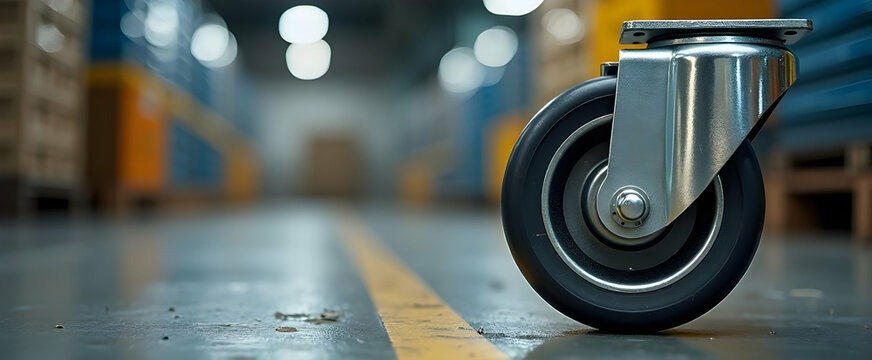
Key Components of a Heavy Duty Casters: A Deeper Look
Understanding the anatomy of Heavy Duty Casters is the first step to selecting the right one.
1. The Wheel: The Point of Contact
The wheel is arguably the most critical component of a material handling system, as it is the primary point of contact that directly interacts with the floor, and its choice of material dictates overall performance. Polyurethane (PUR) is a top-tier choice for many applications, offering an excellent balance of high load capacity, superior floor protection, effective noise reduction, and resistance to oils, greases, and chemicals, and is known for its high “load capacity to weight” ratio. Nylon is another option, being extremely durable and capable of handling the heaviest loads, with strong resistance to abrasion, chemicals, and high temperatures;
its primary downside can be a tendency to be noisy and potentially mark soft floors. Alternatives include Vulcanized Rubber, which provides superior shock absorption and quiet operation ideal for uneven surfaces, and Phenolic (laminated fabric) wheels, which are exceptionally hard, non-marking, and resistant to heat and chemicals, but can be brittle under impact. For the most extreme environments like steel mills or foundries, Cast Iron or Forged Steel wheels are the ultimate choice, as they can withstand molten metal splash, extreme temperatures, and severe abrasion; however, they are very heavy and will damage most floors.
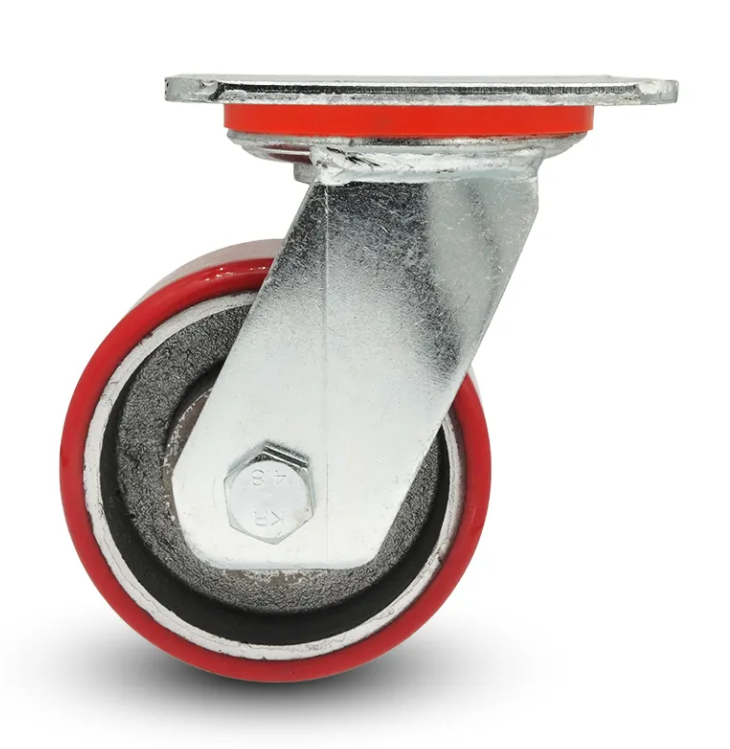
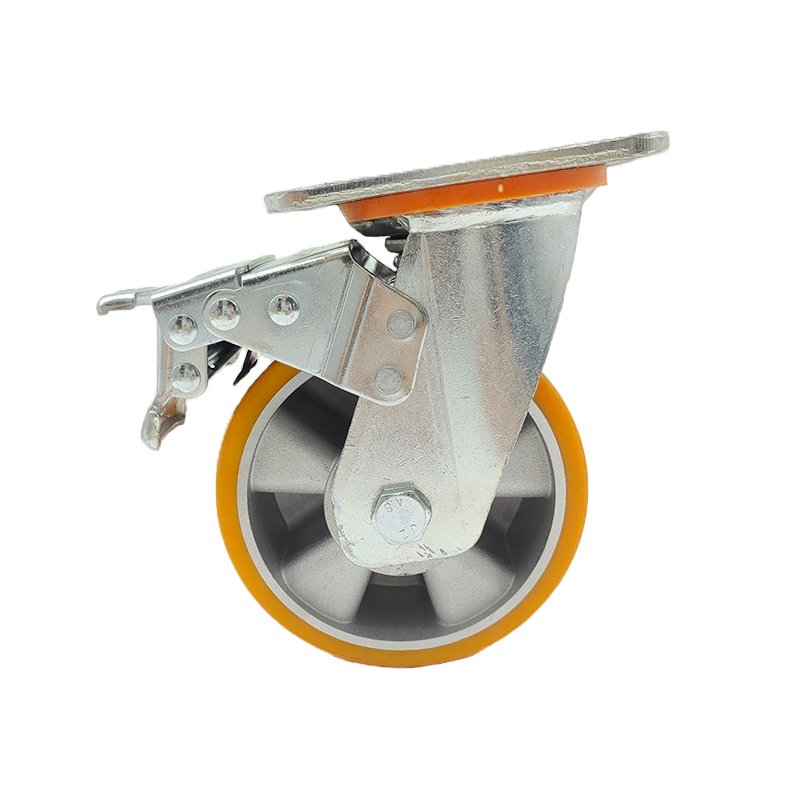
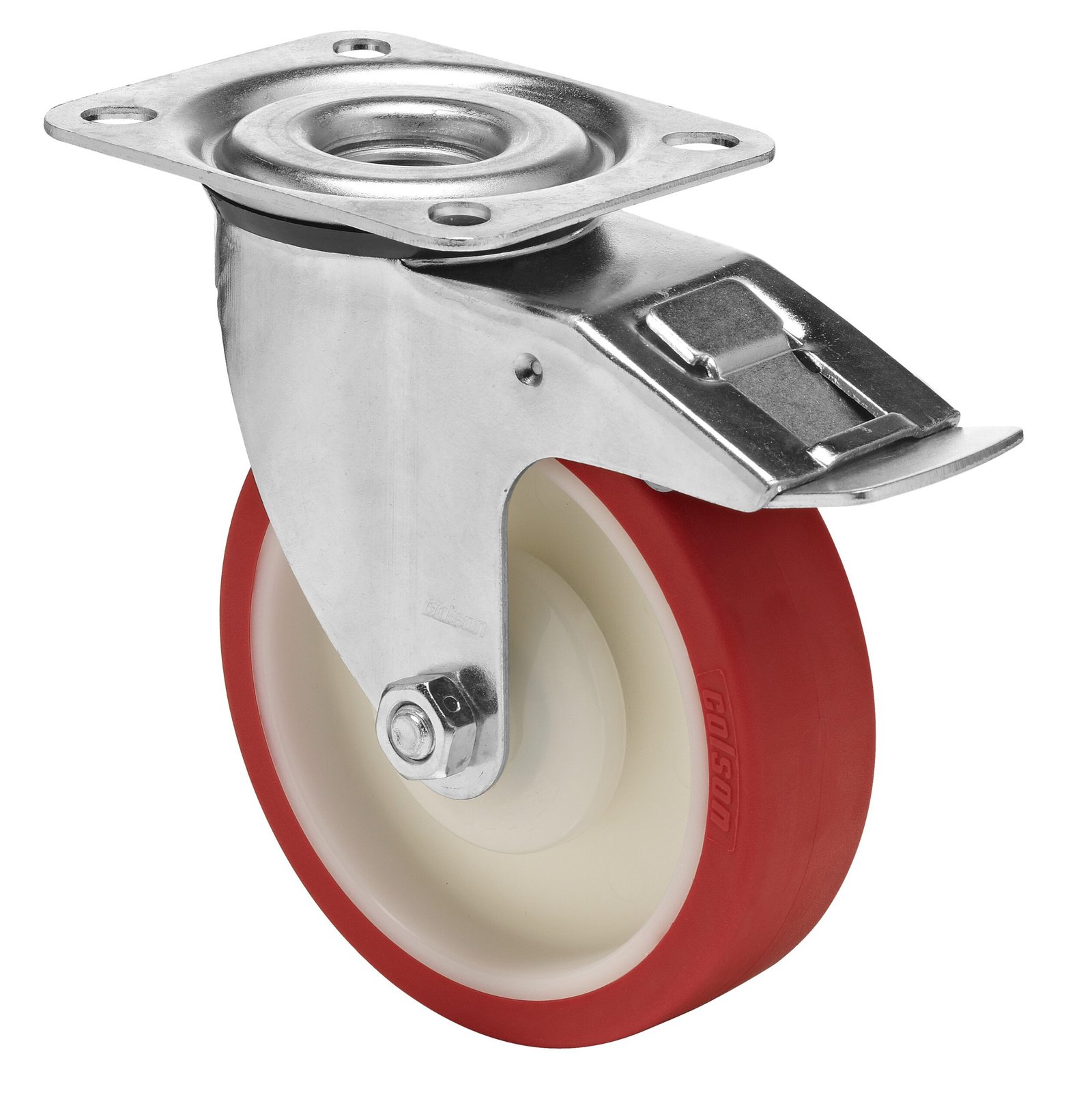
2. The Fork: The Structural Backbone
The fork bears the brunt of the load and transfers it to the wheel. In heavy-duty applications, forks are typically forged or precision-welded from high-tensile steel. Forged forks are generally stronger and more resistant to metal fatigue and impact shock than stamped or welded alternatives. The thickness and design of the fork legs are direct indicators of its load capacity.
3. The Bearing: The Heart of Smooth Movement
The bearing is a pivotal component that reduces friction between the wheel and the axle, directly determining how easily the Heavy Duty Casters rolls and swivels under load. For heavy-duty applications, roller bearings—specifically the tapered type—are considered the gold standard, as they can handle both radial (rolling) and thrust (swiveling) loads simultaneously, making them ideal for high-capacity, multidirectional movement.
Ball bearings serve as a good choice for medium to heavy loads, offering a generally smooth roll, though they are less effective than tapered roller bearings for extreme swiveling under maximum load. For lighter-duty applications or environments where corrosion is a primary concern—for example, when using Delrin bushings—a plain bore design with bushings is suitable, though it typically requires more force to initiate movement.
4. The Swivel Mechanism & Top Plate
For swivel casters, the integrity of the kingpin and the swivel raceway is crucial, where a precision-machined raceway with hardened steel balls ensures smooth, consistent rotation without the risks of “shock loading” or seizing, while the top plate serves as the primary mounting interface, meaning its thickness, bolt hole pattern, and weld quality are all vital for a secure attachment. This directly informs the strategic choice between rigid and swivel casters, as every mobile system requires a combination of both types for optimal control.
Swivel casters, which rotate 360 degrees, provide unparalleled maneuverability for navigating tight corners and confined spaces and are essential for steering. Conversely, rigid (fixed) casters are locked in a straight line, providing critical stability and tracking, which is especially important for long, heavy loads as they prevent unwanted sideways movement. A common configuration is two rigid casters and two swivel casters on a platform or cart, though for very long equipment, a 50/50 split or even a 70/30 (rigid/swivel) split might be used to enhance directional control.

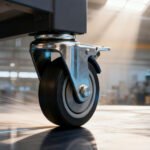
metal caster wheels
heavy duty caster wheels with locks
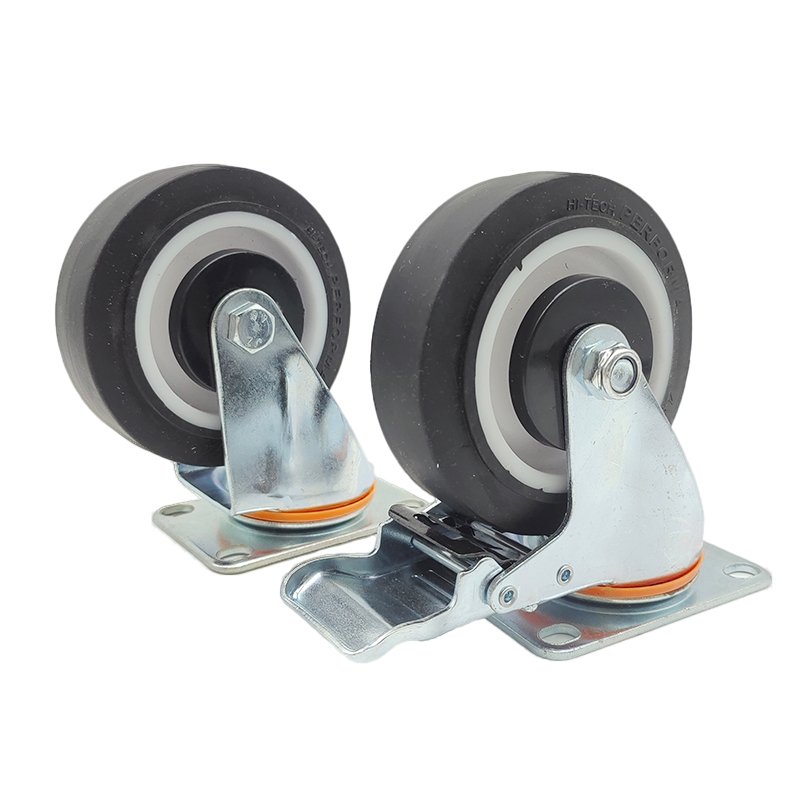
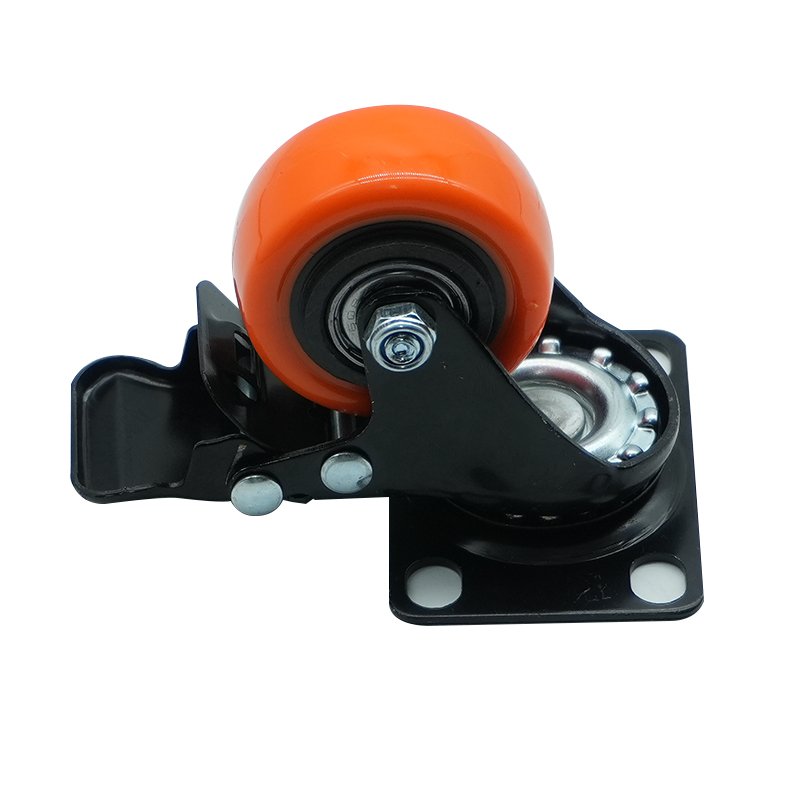
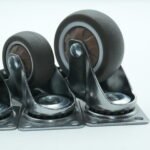
5 Inch Heavy Duty Castors Wheels Trolley Swivel Caster
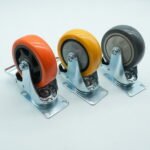
6 Inch Swivel Wear Resistant Rubber Heavy Duty Wheels


How to Select the Right Heavy Duty Casters: A 5-Step Checklist
Making the wrong choice can lead to premature failure, damaged goods, injured employees, and ruined floors. Follow this checklist.
1. Calculate the Total Load Capacity
This is the most critical step.
- Calculate the Gross Weight: Determine the weight of the equipment itself PLUS the maximum load it will ever carry.
- Apply the Safety Factor: Divide the gross weight by the number of casters that will be in contact with the floor. Crucially, you must then apply a safety factor. Industry standards typically recommend a minimum of 25-30% safety margin. For dynamic loads or uneven floors, a 50-100% margin is advisable.(Formula: (Gross Weight / Number of Casters) x Safety Factor = Minimum Load Capacity per Caster)
Example: A 4,000 lb machine. Using 4 casters: 4,000 / 4 = 1,000 lbs per caster. With a 30% safety factor: 1,000 x 1.3 = 1,300 lbs minimum capacity per caster.
2. Analyze Your Floor Conditions
- Smooth, Sealed Concrete/Epoxy: Most wheel types are suitable. Polyurethane is an excellent all-rounder.
- Rough, Uneven, or Cracked Concrete: Soft-tread wheels like vulcanized rubber are essential to absorb shock and prevent wheel damage.
- Grass, Gravel, or Outdoor Terrain: Large-diameter wheels with wide treads are necessary to overcome resistance and prevent sinking.
- Sensitive Floors (Vinyl, Wood, Polished): Non-marking polyurethane or rubber wheels are mandatory to prevent scuffing and staining.
3. Evaluate the Operational Environment
- Chemicals/Oils/Grease: Specify Heavy Duty Casters with chemical-resistant wheels (Phenolic, Polyurethane, Nylon) and corrosion-protected finishes (Zinc plating, Stainless Steel) on the hardware.
- High Temperatures: Phenolic, nylon, or cast iron wheels are required. Standard rubber and polyurethane will melt.
- Food & Beverage, Pharmaceutical, or Cleanrooms: Electropolished stainless steel Heavy Duty Casters with non-marking, non-porous wheels (certain PUR or Phenolic) that are easy to clean and meet hygiene standards (e.g., FDA, USDA).
- Electrostatic Discharge (ESD): For electronics manufacturing, specify ESD-safe casters to protect sensitive components from static damage.
4. Determine Maneuverability Requirements
- How tight are the turning radii?
- Will the equipment be pushed manually or towed by a machine?
- Do you need precision positioning? A high-quality swivel mechanism is key.
5. Consider Special Features
- Brakes: Essential for safety. Options include total-lock (wheel and swivel), wheel-only lock, or side-brake lock.
- Thread Guards: Protect the swivel mechanism from debris like strings, fibers, or wires that can cause seizing.
- Shock Absorption: Built-in shock absorbers can protect both the load and the equipment from damage caused by traversing bumps or dock plates.
Why Partner with Us for Your Heavy Duty Casters Needs?
We don’t just sell casters; we engineer solutions. We understand that downtime is not an option. Here’s what sets us apart:
- Uncompromising Quality & Rigorous Testing: Every batch of our heavy duty casters undergoes stringent load, impact, and endurance testing. We use forged steel forks, precision-tapered roller bearings, and premium-grade wheel materials to ensure they perform under the most demanding conditions.
- Extensive Customization Capabilities: We recognize that standard solutions don’t always fit. We offer custom bore sizes, wheel diameters, tread widths, top plate configurations, and specialized finishes to meet your exact specifications.
- Global Compliance & Certification: Our products are designed to meet and exceed international standards, including ISO, DIN, and ANSI/BIFMA, giving you peace of mind for your global operations.
- Expert Technical Support: Our team of engineers is available to help you calculate load capacities, select the right material, and design the perfect mobility solution for your unique application. We are your partners in productivity.
- Robust Global Supply Chain: As a dedicated B2B exporter, we have the logistics expertise to ensure your orders are delivered on time, anywhere in the world, with full documentation and support.
Leave a Reply