

In the world of industrial mobility, the choice of casters can significantly impact efficiency, safety, and operational costs. For businesses seeking reliable solutions for heavy duty applications, the debate often narrows down to two robust contenders: nylon casters and cast iron casters. Both materials offer distinct advantages tailored to specific environments and demands. This in-depth comparison will explore their properties, benefits, limitations, and ideal use cases, empowering you to make an informed decision for your equipment needs—especially when selecting a heavy duty castor wheel for demanding tasks.
Understanding the Basics: Material Properties and Manufacturing
Nylon Casters:
Nylon, a robust synthetic polymer renowned for its exceptional versatility and engineering prowess, serves as a fundamental material in casters production, where it is often molded under high heat and pressure to create a dense, resilient, and homogenous structure. These high-performance wheels can be manufactured in two primary forms: as pure, solid nylon for general-duty applications, or as a composite material that is reinforced with other elements like fiberglass or mineral fillers to significantly enhance its load capacity, rigidity, and thermal stability.
The result of this sophisticated manufacturing process is a wheel that is characteristically hard and durable, capable of resisting abrasion and deformation, yet simultaneously possesses a degree of inherent shock absorption and flexibility that provides a smoother transition over minor floor imperfections compared to more brittle alternatives.
Cast Iron Casters:
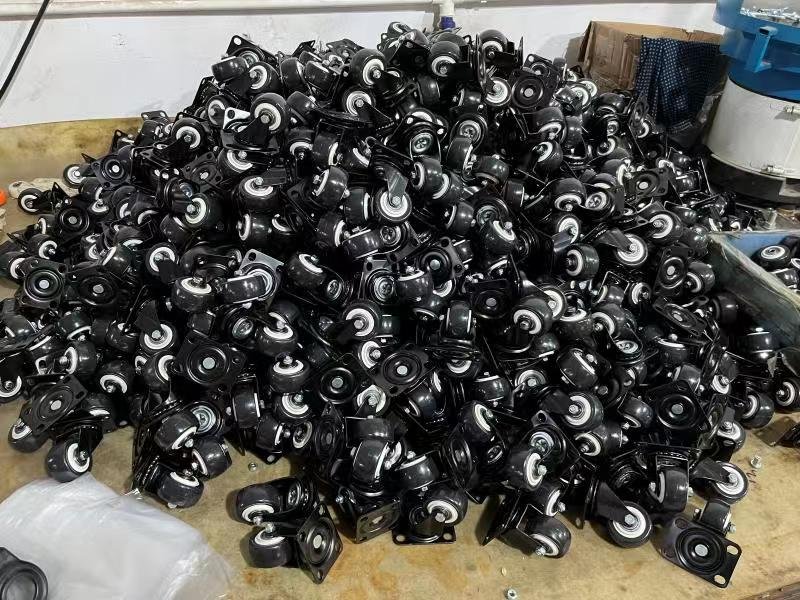
Cast iron wheels represent a classic and time-tested choice in material handling, forged through a process where molten iron is poured into molds to create an exceptionally hard and rigid wheel structure. This fundamental characteristic of cast iron—its traditional strength and unparalleled durability—has solidified its long-standing reputation as a favorite for the most punishing industrial environments, such as steel mills, foundries, and heavy machining facilities. Its sheer mass and density are its defining characteristics, providing not only immense load-bearing capacity but also a formidable resistance to deformation under extreme weight and an ability to withstand severe abrasion, high temperatures, and even the splash of molten metal.
Head-to-Head Comparison: Key Performance Factors
1. Load Capacity and Strength
When it comes to raw, brute strength, both materials excel, but they approach it differently.
- Cast Iron: Cast iron casters are synonymous with extreme load capacity. Their immense density and rigidity allow them to bear staggering weights without deformation. For applications involving stationary heavy machinery, massive industrial presses, or forging equipment, a heavy duty castor wheel made of cast iron is often the undisputed champion. They distribute weight evenly and resist flattening under static loads for extended periods.
- Nylon: Modern nylon wheels have made incredible strides in load-bearing technology. High-quality, reinforced nylon wheels can support loads that rival, and in some cases, meet those of smaller cast iron wheels. Their strength comes from their engineered composition rather than pure density. They are excellent for dynamic heavy-duty applications where the load is consistently moved.
Verdict: Cast iron has a slight edge in ultimate, static load capacity. However, for a moving heavy duty castor wheel, advanced nylon models offer a highly competitive and often more practical solution.
2. Floor Protection and Noise Levels
This is a category where the differences are stark and often decisive.
- Nylon: Nylon wheels are renowned for being non-marking and floor-friendly. Their relatively smooth, hard surface glides over floors without leaving scuff marks, scratches, or deposits. This makes them ideal for finished surfaces like epoxy, sealed concrete, hardwood, and tiles. Furthermore, nylon operates with a low, quiet hum, significantly reducing noise pollution in warehouses, factories, and retail environments.
- Cast Iron: The extreme hardness of cast iron is a double-edged sword. While it resists abrasion, it is notoriously harsh on floors. It can easily scratch, dent, and gouge soft or finished surfaces. The metal-on-concrete contact also generates considerable noise, creating a loud, clattering environment that can be disruptive and contribute to worker fatigue.
Verdict: Nylon is the clear winner for floor protection and quiet operation. If preserving your floor surface and maintaining a quieter workspace are priorities, nylon is the superior choice.
3. Resistance to Environmental Factors
The operating environment plays a crucial role in material selection.
- Nylon: Nylon boasts excellent resistance to a wide range of chemicals, including oils, greases, solvents, and most acids and alkalis. It is also non-corrosive, making it perfect for environments that are frequently washed down, such as food processing plants, pharmaceutical labs, and breweries. However, nylon can be susceptible to prolonged UV exposure (which may cause brittleness) and can absorb minute amounts of moisture in extremely humid conditions, potentially affecting its dimensions over a very long period.
- Cast Iron: The primary weakness of cast iron is its vulnerability to rust and corrosion. Exposure to water, humidity, or corrosive chemicals will quickly lead to oxidation, which can pit the wheel’s surface, compromise its structural integrity, and create contamination. While coatings and platings are available, they can wear off, leaving the base metal exposed.
Verdict: Nylon offers far superior corrosion and chemical resistance, making it the go-to material for harsh, wet, or cleanroom environments.
4. Durability and Wear Resistance
Both materials are durable, but their wear patterns differ.
- Cast Iron: Cast iron wheels have exceptional abrasion resistance on rough, uneven surfaces like concrete. They are less likely to be cut or gouged by debris. However, they are brittle and can crack or chip if subjected to sharp, high-impact shocks against immovable objects like rail tracks or potholes.
- Nylon: Nylon offers a unique combination of hardness and resilience. It resists chipping and cracking upon impact better than cast iron. It also handles debris well, though extremely sharp objects under high load could potentially cause cutting. Its wear life on smooth and semi-rough surfaces is exceptional.
Verdict: The “more durable” title depends on the context. Cast iron resists abrasive wear on rough terrain, while nylon excels in impact resistance and overall longevity in diverse conditions.
5. Weight, Maneuverability, and Cost
- Weight: Nylon wheels are significantly lighter than their cast iron counterparts. This reduces the overall weight of the equipment, making it easier to start, stop, and maneuver. This translates to less operator fatigue and higher productivity.
- Maneuverability: The lighter weight and often better rolling resistance (on smooth floors) of nylon make for superior maneuverability.
- Cost: Cast iron wheels can be less expensive upfront for basic models. However, when you factor in the potential costs of floor repair, noise abatement, and replacement due to corrosion, the Total Cost of Ownership (TCO) often favors nylon in the long run. High-performance nylon wheels represent a valuable investment in operational efficiency.


Conclusion: The Modern Workhorse vs. The Traditional Titan
The choice between nylon and cast iron casters are not about finding a universal “best” option, but about matching the wheel’s properties to your specific application’s demands.
Cast iron remains a formidable heavy duty castor wheel for niche, ultra-heavy static applications on forgiving surfaces. However, for the vast majority of modern industrial, commercial, and logistical applications, nylon casters present a more advanced, versatile, and ultimately more economical solution. Their blend of high load capacity, floor protection, corrosion resistance, quiet operation, and excellent maneuverability makes them the intelligent choice for businesses looking to optimize their operations for safety, efficiency, and longevity.
When investing in your next set of heavy duty casters, look beyond mere load rating. Consider the full picture of your operational environment. In doing so, you’ll likely find that the engineered performance of a high-quality nylon heavy duty castor wheel is the superior investment for driving your business forward.




Leave a Reply