

In diverse settings ranging from industrial production and commercial services to healthcare, casters—though often overlooked—play a pivotal role in determining equipment mobility efficiency, operational safety, and overall usage costs. Industry statistics reveal that improper caster selection accounts for 18% of equipment failures, inflicting over one billion yuan in indirect economic losses on enterprises annually. Whether for industrial carts bearing tons of heavy loads or frequently moved office chairs, choosing the right casters can significantly boost operational efficiency. This guide aims to establish a scientific and complete caster selection and management system, covering core selection principles, material advantage analysis, soft vs. hard caster comparisons, scenario-specific selection schemes, and full-lifecycle maintenance strategies.
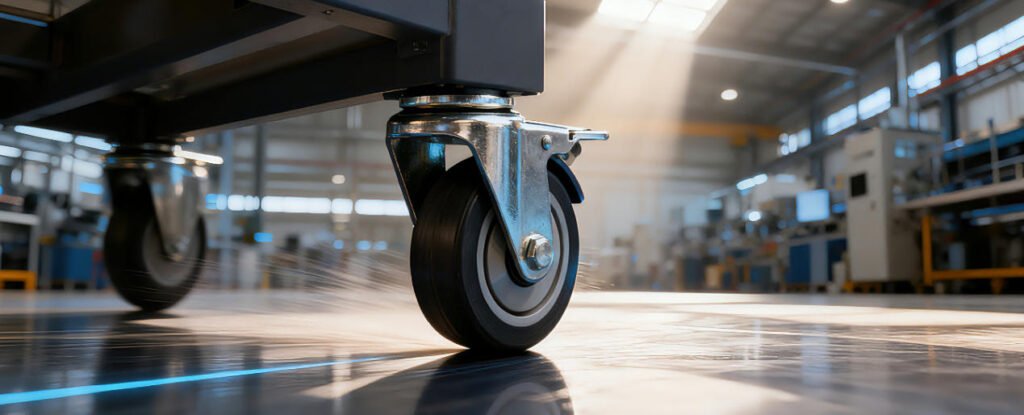
I. Core Principles of Caster Selection: A Scientific Logic Balancing Needs and Scenarios
Caster selection is far more than just “load matching”; it requires a comprehensive evaluation of multi-dimensional factors such as load characteristics, environmental conditions, and usage frequency to establish a dynamically balanced decision-making system. The following four core principles serve as key safeguards to avoid selection errors and enhance equipment operational value.
1.1 Load Adaptation Principle: Dual Considerations of Static and Dynamic Loads
Load stands as the primary parameter for caster selection, yet decisions should never be based solely on the nominal weight of equipment. Professional selection demands a clear distinction between two core indicators: static load and dynamic load. Static load refers to the weight borne by casters when stationary, while dynamic load represents the actual weight endured during equipment movement. Due to inertial impacts and vibrations, the latter requires a larger safety margin. Industry general standards stipulate that the rated dynamic load of casters should be 1.5 to 2 times the actual bearing weight, and this safety factor should be increased to 3 times under extreme working conditions such as high-frequency impacts or rough road surfaces.
The balance of load distribution is equally crucial. Take a 1000kg piece of equipment supported by four casters as an example: theoretically, each caster bears 250kg, but practical movement may cause a 30% load fluctuation due to center-of-gravity shifts. Consequently, casters with a rated load of over 350kg are necessary. For equipment with a high center of gravity, such as vertical instruments or multi-layer shelves, additional anti-tip designs—typically achieved by increasing wheel spacing or adopting a double-wheel configuration—are essential. Bearing types directly correspond to load levels: ball bearings suit light-load scenarios below 400kg, roller bearings for medium to heavy loads, and industrial casters equipped with tapered roller bearings are a must for ultra-heavy equipment bearing over 5000kg.
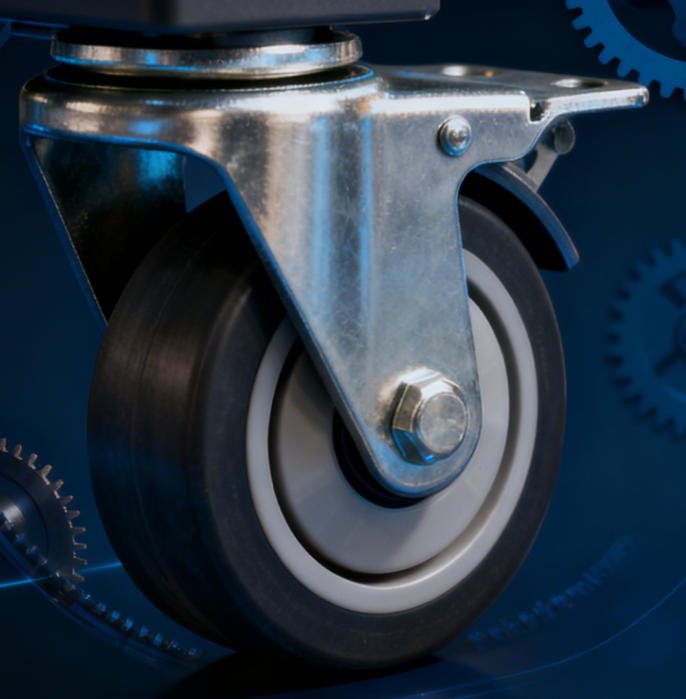
1.2 Floor Adaptation Principle: Precise Matching from Material to Size
Floor conditions directly determine caster wear rates and movement resistance; mismatched casters can reduce service life by over 60%. For smooth, hard floors (such as tiles, polished concrete, and epoxy floors), soft-material casters effectively minimize scratches and operational noise. For rough surfaces (like rough concrete workshop floors, outdoor gravel roads, and warehouse grilles), a combination of hard materials and large-diameter wheels is required to prevent excessive wheel wear or debris embedment.
Wheel diameter selection follows the “obstacle crossing rule”: the wheel diameter should be at least three times the height of the largest obstacle on the floor. For instance, a workshop floor with 5mm cracks requires casters with a diameter of over 15mm, while complex scenarios like cobblestone roads or construction sites demand large-diameter rubber wheels of 200mm or more for smooth movement. Floor protection is equally important—for environments with high demands on floor cleanliness and integrity, such as hospitals, laboratories, and high-end office buildings, polyurethane or rubber casters are indispensable. Their wheel surfaces leave no black marks or debris, reducing subsequent cleaning and maintenance costs.
1.3 Environment Adaptation Principle: Protective Design Against Extreme Conditions
Specialized environments impose strict requirements on caster materials and structures—an often-overlooked aspect that directly impacts operational safety. In chemically corrosive environments (such as chemical plants, electroplating workshops, and laboratories), natural rubber casters are prone to failure when eroded by acids and alkalis, whereas synthetic rubber (e.g., nitrile rubber, fluororubber), polyurethane, or 304 stainless steel casters maintain stable performance. In humid environments (like food processing workshops, cold storage facilities, and aquatic product warehouses), casters with stainless steel brackets and fully sealed bearings should be prioritized to prevent jamming or structural failure caused by rust.
Extreme temperature conditions also test caster durability: ordinary rubber wheels become brittle and crack in -40℃ cold storage, necessitating EPDM rubber casters resistant to low temperatures. For baking workshops or steel smelting plants with temperatures exceeding 120℃, high-temperature-resistant silicone rubber wheels and special high-temperature grease are essential. The “Series 45” casters from the internationally renowned brand Colson, featuring proprietary green long-lasting lubrication technology, achieve smooth rotation across a wide temperature range of -45℃ to 127℃, providing a mature and reliable solution for extreme temperature scenarios.
1.4 Function Adaptation Principle: Detailed Design Balancing Efficiency and Safety
Selecting caster types based on the functional requirements of specific scenarios significantly enhances operational efficiency and safety. In narrow spaces (such as hospital corridors, dense warehouse shelving areas, and workshop assembly lines), a combination of 360° rotating swivel casters and fixed casters (usually a 2-fixed + 2-swivel configuration) balances flexible steering and stable propulsion. For equipment requiring frequent immobilization (like operating tables, assembly workbenches, and testing instruments), casters with dual-brake systems are essential to ensure absolute stability without displacement during operation.
Rolling resistance directly affects operational effort and efficiency. For equipment pushed more than 50 times daily (such as logistics trolleys and medical carts), casters with ball bearings or precision roller bearings reduce pushing force requirements by over 40%, easing worker fatigue. In electronics workshops or semiconductor factories with anti-static needs, specialized anti-static casters efficiently dissipate equipment static electricity through the wheel surface to the ground, preventing electrostatic damage to components. Their surface resistance must be strictly controlled within the safe range of 10⁶-10⁹Ω.
II. Comprehensive Advantages of Rubber Casters: All-Round Performance Derived from Material Properties
Among various caster materials, rubber casters stand out as a preferred choice balancing performance, safety, and cost-effectiveness, finding wide application in healthcare, office settings, food industry, electronics, and more. Their core advantage lies not in outstanding performance in a single dimension, but in balanced adaptability across scenarios, meeting diverse needs in different environments.
2.1 Shock Absorption: A “Flexible Barrier” Protecting Goods and Equipment
The high elasticity of rubber makes it a natural shock-absorbing material. When encountering floor obstacles, the wheel surface can undergo 15%-30% controlled deformation, effectively absorbing impact energy to form a “flexible barrier” protecting goods and equipment. In the transportation of electronic components, trolleys equipped with rubber casters can precisely control vibration amplitude within 0.5mm, reducing component damage caused by vibration by 65%. During the handling of precision instruments (such as optical equipment and testing meters), this excellent shock-absorbing performance prevents calibration deviations or structural damage to internal precision parts caused by vibration.
Different rubber materials offer varying shock-absorbing effects and should be selected as needed: natural rubber, with a rebound rate of up to 80%, is suitable for scenarios demanding superior shock absorption (such as medical equipment and fragile goods transportation). Synthetic rubber like nitrile rubber, with a rebound rate of approximately 65%, combines excellent oil resistance, making it more suitable for oily environments such as industrial workshops and mechanical processing facilities. The “SoftMotion” series rubber casters from the well-known domestic brand Bickley, featuring an extra-thick elastic pad designed with 55 Shore A hardness, enhance impact absorption by 40%, successfully solving the problem of pastries being damaged due to road bumps during early-morning delivery in the baking industry.

2.2 Quiet Operation: A “Noise-Reducing Expert” Creating Comfortable Environments
Noise pollution is a prominent issue in offices, healthcare facilities, and homes. Rubber casters significantly reduce rolling noise through the damping effect of their material. Test data shows that on hard floors, rubber casters produce 15-25 decibels less noise than nylon casters—equivalent to reducing sound levels from normal conversation (60dB) to a whisper (35dB). This advantage is particularly crucial in healthcare settings: medical trolleys equipped with rubber casters can maintain noise levels below 35dB when moving in ward areas, effectively avoiding disturbances to patients’ rest and treatment.
A practical case from Bickley Bakery fully demonstrates the noise-reduction value of rubber casters. The bakery’s early-morning delivery trucks, equipped with traditional hard casters, generated high-frequency noise on cobblestone roads in residential areas, leading to frequent complaints. After switching to “SoftMotion” rubber casters, the flexible contact between the rubber wheel surface and the ground eliminated impact and resonance noise from hard wheels. Additionally, the extra-thick elastic pad further reduced noise transmission, lowering on-site noise levels below 40dB and nearly eliminating complaints.
2.3 Floor Protection: A “Gentle Guardian” Preserving Floor Assets
Rigid contact between hard casters and floors easily causes permanent damage such as scratches and dents, a problem perfectly avoided by the soft wheel surface of rubber casters. In offices with solid wood floors, office chairs with rubber casters leave no marks even with frequent movement. In contrast, nylon casters can cause noticeable scratches on solid wood floors within three months under 8 hours of daily use, with single-floor repair costs reaching thousands of yuan. For industrial floors like polished concrete and epoxy floors, rubber casters also prevent black mark contamination caused by material transfer from hard wheels, reducing cleaning workload and consumable costs.
The floor protection advantage of rubber casters also lies in their scientific weight distribution. Their larger contact area reduces pressure per unit area to 1/3 that of hard casters, effectively preventing permanent indentations on soft floors such as PVC flooring and carpets. Statistics from a large retail store show that shelves and promotional carts equipped with rubber casters save nearly 10,000 yuan annually in floor maintenance and repair costs, extending floor service life by 3-5 years.
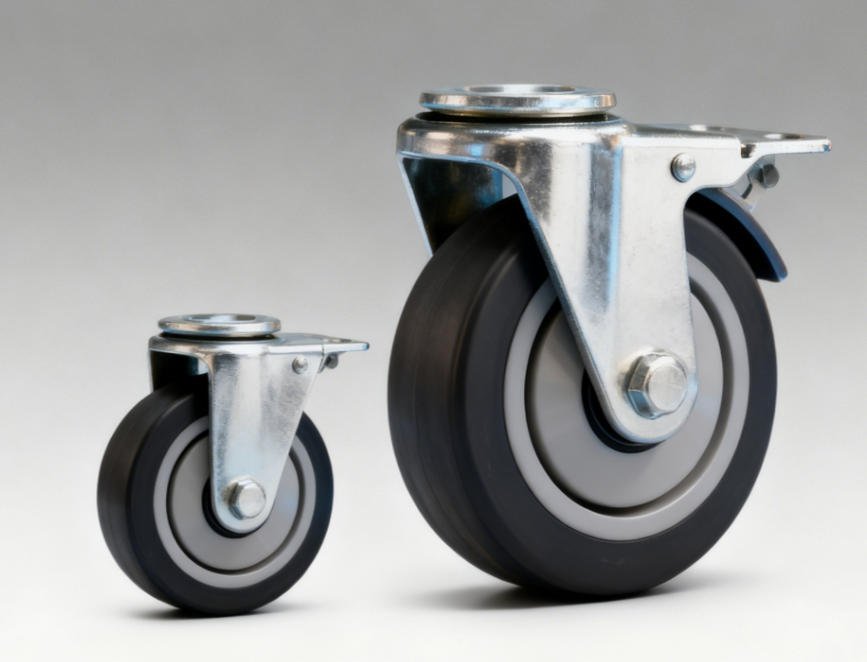
2.4 Superior Traction: A “Stability Guarantee” Enhancing Operational Safety
The high friction coefficient of rubber endows casters with excellent traction. On wet surfaces (such as kitchens, bathrooms, and food processing workshops), their friction coefficient can exceed 0.6—far higher than the 0.3 of nylon casters. This feature is crucial in food processing workshops: material trolleys with rubber casters can precisely control braking distance within 0.2 meters even on floors with oil-water mixtures, significantly reducing safety risks such as equipment tipping and material spillage caused by slipping.
Rubber casters with special tread designs further enhance traction for specific scenarios: serrated treads form mechanical engagement on muddy or gravel roads, improving stability on complex terrains; horizontal treads quickly drain water between the wheel surface and the ground, ensuring consistent traction in humid environments. In scenarios like logistics warehouse ramps and loading docks, rubber casters with braking functions provide reliable positioning performance, preventing equipment from sliding independently on inclined surfaces and ensuring operational safety.
2.5 Durability and Cost-Effectiveness: A “Value-for-Money Choice” Balancing Cost and Service Life
Although the initial purchase cost of rubber casters is slightly higher than that of ordinary plastic casters, their service life of 2-3 years is 1.5-2 times that of plastic casters, resulting in lower overall usage costs. In high-frequency usage scenarios such as supermarket shopping carts and logistics turnover boxes, high-quality rubber casters can extend replacement cycles to over 3 years, reducing comprehensive usage costs by 40%. The durability of rubber casters stems from their excellent anti-aging and wear-resistant properties—rubber wheel surfaces treated with vulcanization technology can effectively resist erosion from environmental factors such as ultraviolet rays and ozone, preventing cracking, hardening, or chalking.
Rubber casters maintain stable service life across different scenarios: in office environments with 50 daily movements, their service life can reach 3 years; in industrial workshops with 200 daily movements and 300kg loads, they still maintain a service life of over 1.5 years. This “long service life + low maintenance” feature makes them an ideal choice balancing performance and economy, particularly suitable for small and medium-sized enterprises sensitive to operational costs.
III. Soft vs. Hard Casters: Precise Adaptation of Material, Design, and Scenario
The selection between soft casters (represented by rubber and soft polyurethane) and hard casters (represented by nylon, steel, and hard polyurethane) essentially boils down to matching material properties with usage scenarios. Neither type is inherently superior—differences lie only in “scenario adaptability.” Incorrect selection will directly shorten caster service life, degrade user experience, and even pose safety hazards.
3.1 Core Differences: Performance Boundaries Determined by Material and Design
The fundamental difference between soft and hard casters stems from material hardness (measured by Shore A hardness): soft casters typically range from 50-70 Shore A, characterized by high elasticity and high friction coefficients; hard casters range from 85-95 Shore A, with high strength and low rolling resistance as their main advantages. This material difference directly influences design priorities—soft casters focus on shock absorption, noise reduction, and protection, while hard casters prioritize load-bearing capacity, wear resistance, and mobility efficiency.
| Performance Dimension | Soft Casters (Mainly Rubber) | Hard Casters (Mainly Nylon/Steel) |
|---|---|---|
| Material Hardness | 50-70 Shore A | 85-95 Shore A |
| Rolling Resistance | High (Flexible Contact) | Low (Rigid Contact) |
| Load Capacity | Medium-Low (Typically ≤500kg/Wheel) | High (Up to Tons/Wheel) |
| Noise Level | Low (≤40dB) | High (60-80dB) |
| Floor Protection | Excellent (No Scratches/Indentations) | Poor (Prone to Causing Damage) |
| Wear Resistance | Medium (Suitable for Smooth Floors) | Excellent (Suitable for Rough Floors) |
3.2 Scenario Adaptation: Selection Logic Guided by Floor Type
Floor type serves as the core criterion for distinguishing applicable scenarios of soft and hard casters. The friction coefficient, flatness, and vulnerability of different floors directly determine caster performance and service life. Only by selecting casters based on floor characteristics can optimal matching of caster performance and usage needs be achieved.
3.2.1 Hard Floors: The Exclusive Domain of Soft Casters
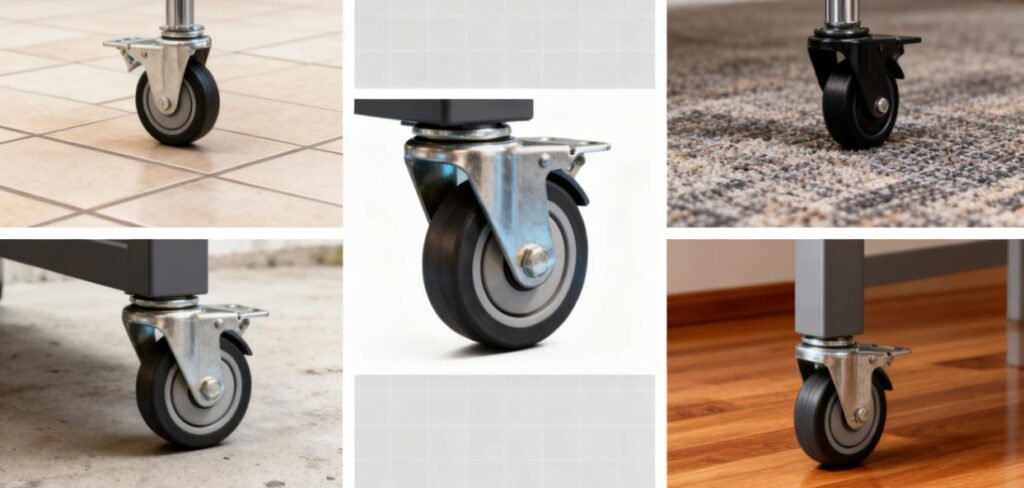
For hard floors such as solid wood, tiles, polished concrete, and epoxy flooring—characterized by smooth surfaces and vulnerability to damage—soft rubber casters represent the optimal solution. Their soft wheel surfaces fundamentally prevent floor scratches, while high friction coefficients ensure stable equipment movement. Additionally, their low-noise properties perfectly suit quiet-demanding environments like offices, healthcare facilities, and homes. In office buildings, office chairs with rubber casters not only avoid damaging expensive solid wood floors but also allow employees to move frequently without disturbing colleagues, enhancing overall workplace experience.
Special attention is required for oily hard floors (such as kitchens, restaurant back-of-house areas, and mechanical processing workshops): oil-resistant synthetic rubber casters (e.g., nitrile rubber) should be prioritized to prevent natural rubber from swelling and deteriorating when exposed to oil. In clean hospital corridors and pharmaceutical workshops, rubber casters with antibacterial properties are necessary to prevent bacterial growth and cross-contamination, ensuring hygiene and safety.
3.2.2 Soft/Rough Floors: The Arena for Hard Casters
Soft or rough surfaces like carpets, lawns, gravel roads, and rough concrete floors demand casters with strong penetration and wear resistance—areas where hard casters excel. Nylon casters do not sink into carpet fibers due to their rigid wheel surfaces, and their rolling resistance is 50% lower than that of rubber casters, significantly improving mobility efficiency. Steel casters maintain their structural integrity on extremely rough surfaces such as gravel roads and construction sites, effectively preventing rubber wheel surfaces from tearing due to embedded debris.
In warehouse areas with carpeted shelving, picking carts with nylon casters increase cargo turnover efficiency by 30% and reduce worker physical strain. In outdoor construction and mining scenarios, the durability of steel casters is irreplaceable by rubber casters—their service life is over five times that of rubber casters, maintaining stable operation even on floors covered with sharp stones and metal shavings.
3.2.3 Mixed Scenarios: Flexible Combined Solutions
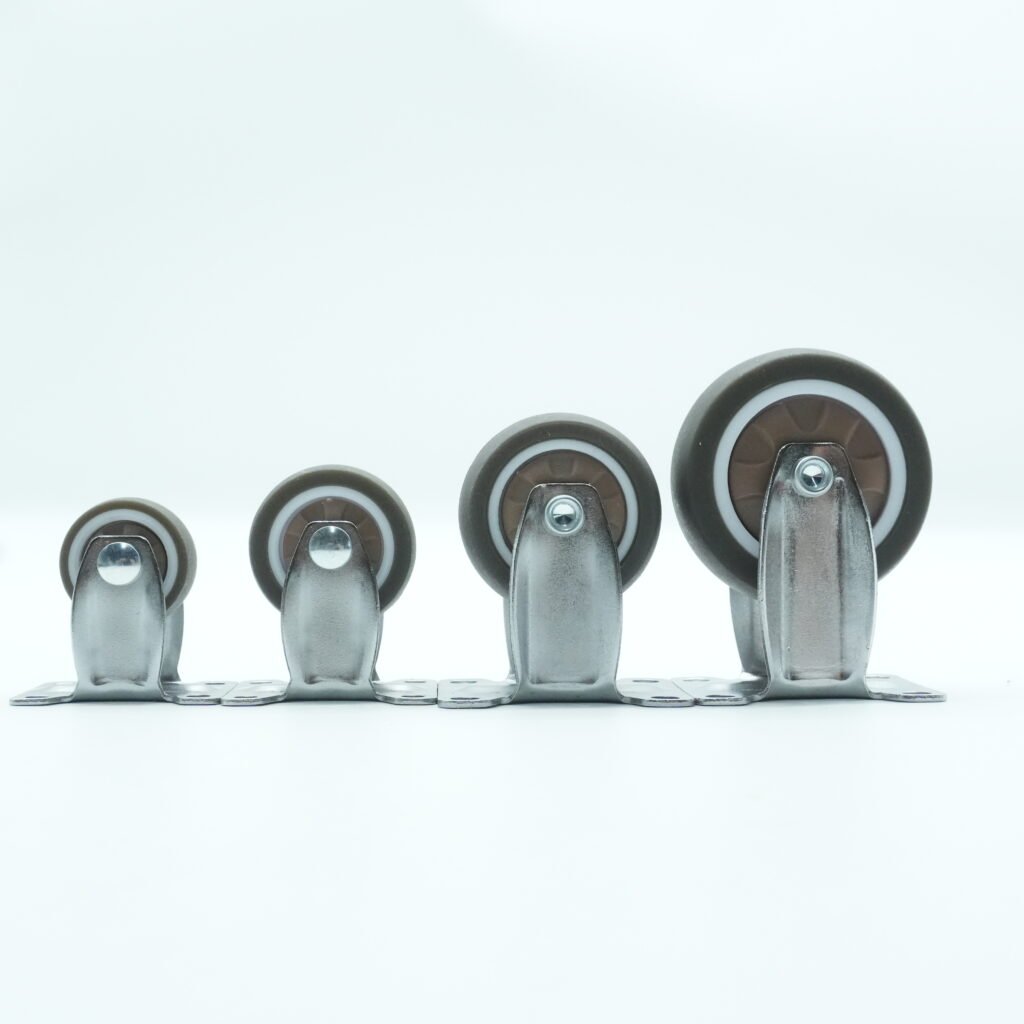
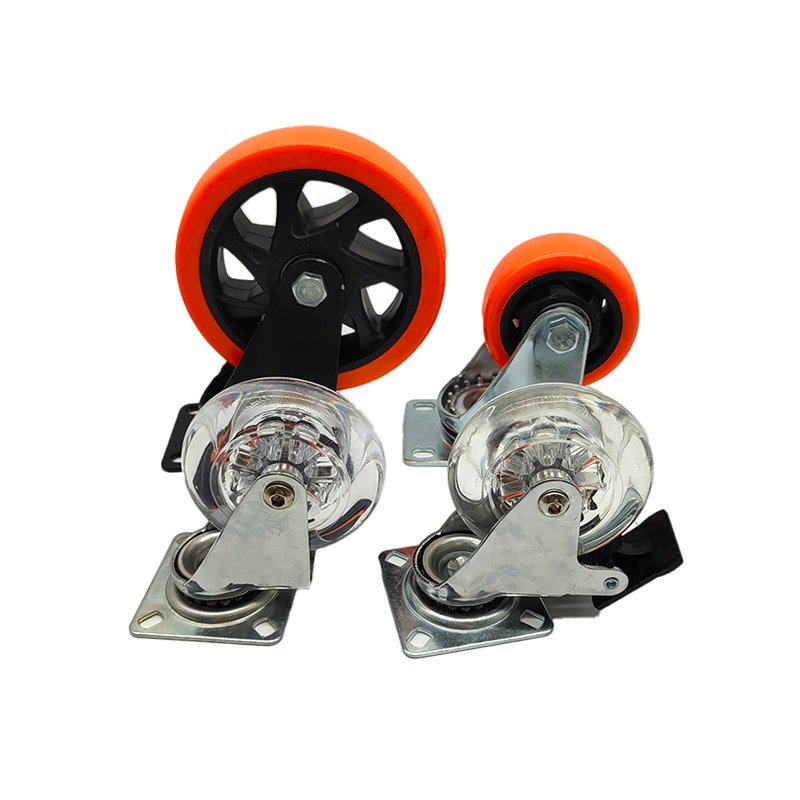
For scenarios with multiple floor types (such as large supermarkets with both tiled aisles and carpeted shelving areas, or industrial parks containing concrete main roads and gravel loading zones), a combined configuration of fixed and swivel casters can be adopted, or dual-material composite casters selected. Composite casters typically feature a hard inner core (e.g., nylon, steel) wrapped in soft rubber, retaining the low-resistance advantage of hard casters while providing the floor protection performance of soft casters for multi-scenario adaptation. Additionally, installing caster-specific floor mats constitutes a cost-effective solution, creating smooth transitions between different floor types and extending caster service life.
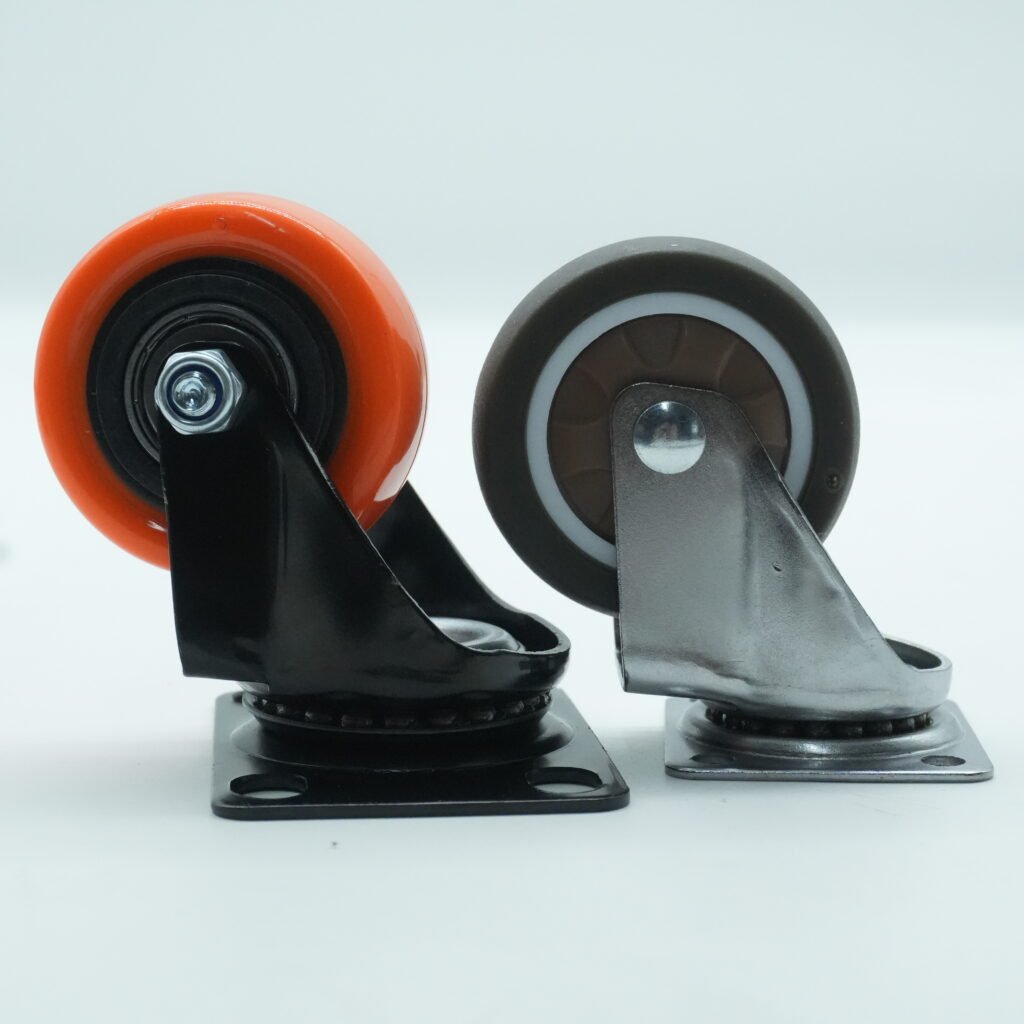
3.3 Special Requirements: Function-Oriented Selection Supplements
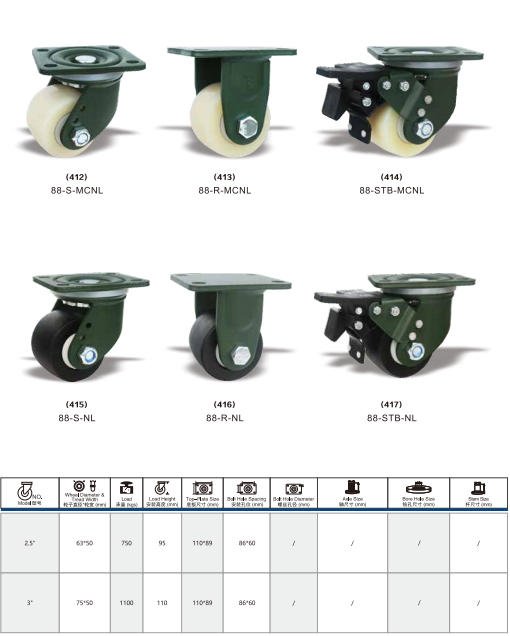
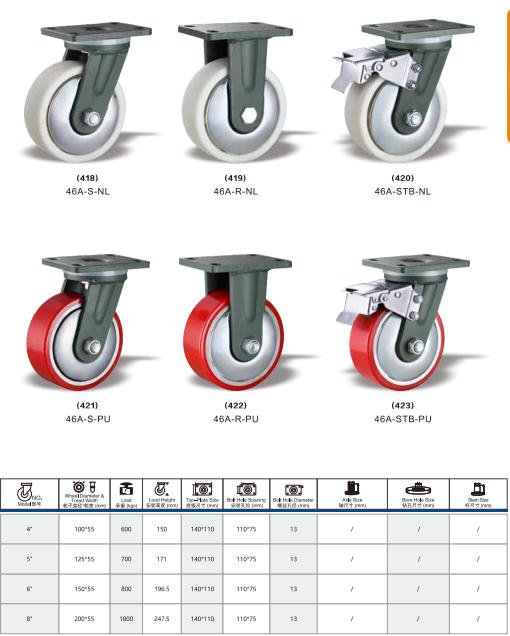
Beyond floor factors, load weight, usage frequency, and special functional requirements also influence caster selection. For heavy-load scenarios (such as industrial equipment and heavy-duty shelves with single-wheel loads ≥1000kg), steel or hard polyurethane casters are mandatory—their rigid structure prevents safety risks caused by wheel deformation. For high-frequency movement scenarios (such as logistics trolleys and express sorting carts with over 300 daily movements), hard polyurethane casters strike the optimal balance between wear resistance and rolling resistance. Their wear rate is only 1/3 that of rubber casters, with rolling resistance comparable to nylon casters, achieving the dual goals of “efficient movement + long service life.”
For noise-sensitive environments (such as libraries, hospital wards, and recording studios), rubber casters should be prioritized regardless of floor type. When necessary, silent bearings can be paired to strictly control operational noise below 35dB. In chemical workshops and oil-gas storage areas with explosion-proof requirements, copper-core hard casters are required to prevent sparks generated by steel friction from causing safety accidents, ensuring compliance with explosion-proof safety standards.
IV. Professional Application Scenarios and Caster Selection Guide: Industry-Specific Custom Solutions
Different industries exhibit significant variations in operating environments, load characteristics, and compliance requirements. Caster selection must address industry-specific pain points with customized solutions. The following selection guidelines for five core application scenarios can be directly used as practical references for enterprises to improve selection accuracy.
4.1 Industrial Manufacturing Scenarios: Dual Guarantee of Load-Bearing and Wear Resistance
Industrial workshops (such as automobile manufacturing, mechanical processing, and hardware stamping) prioritize high-strength load-bearing and wear resistance, while requiring casters to withstand harsh environments with oil, dust, and metal shavings. Single-wheel loads typically range from 500-5000kg, with floors mostly consisting of rough concrete or metal grilles, imposing high demands on caster structural strength and impact resistance.
Selection Recommendations: Prioritize steel-core hard polyurethane casters or all-steel casters with wheel diameters ≥100mm, equipped with sealed roller bearings to prevent dust ingress. For workshops with continuous oil contamination, composite casters wrapped in oil-resistant rubber are necessary to prevent polyurethane materials from swelling and failing when exposed to oil. For high-temperature scenarios like welding workshops and heat treatment facilities, high-temperature-resistant casters with a temperature tolerance ≥200℃ are required to prevent wheel surface softening and deformation. Application cases from an auto parts factory show that after adopting steel-core rubber composite casters, trolley failure frequency decreased from 8 times per month to 1, and caster replacement cycles extended from 6 months to 2 years, significantly reducing maintenance costs.
Compliance Essentials: Must meet ISO 10042 industrial caster load testing standards, with brackets made of Q235 high-strength steel to ensure excellent impact resistance, capable of withstanding instantaneous impacts twice the rated load.
4.2 Healthcare Scenarios: Rigid Requirements for Quiet Operation and Cleanliness
Healthcare environments such as hospitals, nursing homes, and physical examination centers impose strict requirements on caster quietness, cleanliness, and floor protection. Casters must move flexibly across multiple floor types in wards, corridors, and treatment rooms while frequently coming into contact with pharmaceuticals and disinfectants, demanding high material corrosion resistance and hygiene safety.
Selection Recommendations: Prioritize 100% natural rubber casters or medical-grade polyurethane casters with wheel diameters of 50-80mm, equipped with precision ball bearings for quiet and smooth operation. Medical trolleys (such as infusion carts and medication carts) should use swivel casters with dual-brake systems to ensure absolute stability without displacement when stationary. Casters for operating tables and intensive care equipment must have antibacterial properties, with surface bacterial adhesion ≤10CFU/cm² to prevent cross-infection. In applications at a top-tier tertiary hospital, Bickley’s “SoftMotion” rubber casters not only controlled movement noise below 30dB but also obtained medical-grade cleanliness certification, withstanding high-frequency disinfection without aging.
Compliance Essentials: Must meet FDA 21 CFR Part 177 food contact safety standards to ensure no harmful substances leach when in contact with pharmaceuticals or bodily fluids. Additionally, they must withstand long-term exposure to common medical disinfectants such as 84 disinfectant and alcohol without material degradation.
4.3 Office and Commercial Scenarios: Balancing Comfort and Durability
In office and commercial environments including offices, meeting rooms, and office buildings, casters are primarily used for office chairs, mobile workstations, and display racks. Core requirements include quiet operation, smooth movement, and floor protection, with loads typically ranging from 100-200kg and floors mostly consisting of solid wood, composite materials, or epoxy flooring—demanding high wheel surface softness and operational stability.
Selection Recommendations: Prioritize soft rubber casters or TPR (thermoplastic rubber) casters with wheel diameters of 30-50mm, equipped with high-precision ball bearings to reduce steering resistance. Office chair casters should use 360° swivel wheels with steering resistance ≤5N for flexible movement without jamming. Mobile shelves and file cabinets require fixed casters to enhance linear movement stability and prevent tipping. Third-party research data shows that office chairs with rubber casters increase employee satisfaction by 58% and reduce annual enterprise floor repair costs by 70%, achieving the dual value of “experience improvement + cost optimization.”
Precautions: Hard casters made of nylon or plastic are strictly prohibited on vulnerable floors such as solid wood and composite flooring, as their rigid surfaces leave permanent scratches with single-floor repair costs reaching thousands of yuan.
4.4 Food Processing Scenarios: Core Standards of Corrosion Resistance and Easy Cleaning
In food processing workshops, bakeries, and restaurant kitchens, casters must withstand humid, oily conditions and high-frequency cleaning while absolutely preventing food contamination. Floors are mostly anti-slip tiles or epoxy coatings, with significant standing water and oil contamination, imposing high demands on caster waterproofing and corrosion resistance.
Selection Recommendations: Prioritize nitrile rubber casters or polyurethane casters with stainless steel brackets, with wheel diameters of 80-120mm and fully sealed structures to prevent water and oil from entering bearings. Caster surfaces must be smooth and non-porous to avoid food residue accumulation and bacterial growth. Brackets must be made of 304 food-grade stainless steel to prevent rust-induced food contamination. In bakery applications, Bickley’s oil-resistant rubber casters withstand long-term exposure to oil contaminants such as butter and vegetable oil while maintaining stable performance in high-temperature environments below 80℃, meeting the unique needs of bakery workshops.
Compliance Essentials: Must meet NSF/ANSI 169 food processing equipment safety standards and pass IP67 waterproof and dustproof testing to ensure no water damage during high-pressure water gun cleaning.
4.5 Logistics and Warehousing Scenarios: Optimized Combination of Efficiency and Load-Bearing
In logistics warehouses, express sorting centers, and e-commerce storage facilities, casters are primarily used for pallet trucks, turnover boxes, and shelves, requiring a balance of high load-bearing capacity and mobility efficiency. Floors are mostly concrete or anti-slip mats, with potential impacts from forklift rolling and cargo collision, demanding high structural strength and impact resistance from casters.
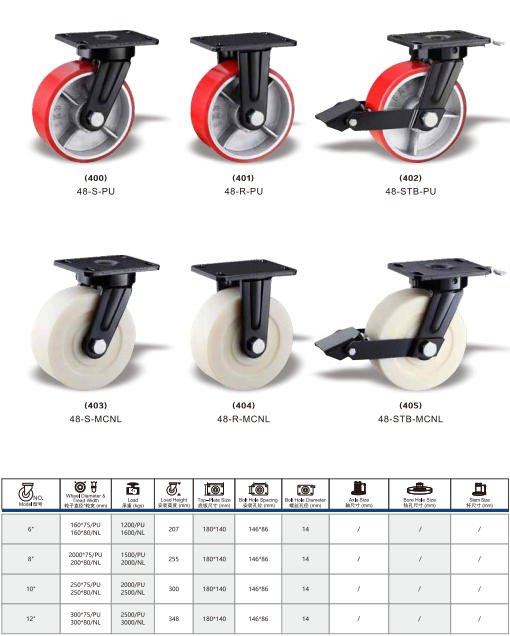
Selection Recommendations: Prioritize hard polyurethane casters or reinforced nylon casters with wheel diameters of 120-200mm, equipped with tapered roller bearings to enhance load-bearing performance. Pallet trucks and hydraulic trolleys should adopt a “2-fixed + 2-swivel” caster combination to ensure flexible steering and stable load-bearing. Heavy-duty shelf casters require impact-resistant designs, capable of withstanding instantaneous impacts twice the rated load to avoid damage from forklift operations. Application data from an e-commerce warehouse shows that after adopting large-diameter hard polyurethane casters, cargo turnover efficiency increased by 25% and annual casters replacement costs decreased by 60%, significantly improving warehouse operational efficiency.
Optimization Solution: In inclined areas such as warehouse ramps and loading docks, casters with dual-brake systems are mandatory. Double locking via wheel surface brakes and bracket brakes prevents equipment from sliding independently, eliminating safety accidents.
V. Casters Maintenance and Service Life Extension Strategies: From Daily Care to Fault Prevention
Scientific maintenance management can extend casters service life by over 50% while significantly reducing fault risks and maintenance costs. Caster maintenance must strictly follow the core principles of “regular inspection, precise lubrication, and timely replacement,” with maintenance frequency dynamically adjusted based on environmental harshness to optimize full-lifecycle costs.
5.1 Daily Cleaning: Foundational Steps to Eliminate Hidden Risks
Casters wear and jamming primarily result from debris accumulation. Daily cleaning must be tailored to specific scenarios to eliminate potential faults at the source:
- Smooth Floor Scenarios (Offices, Hospitals, Office Buildings): Wipe wheel surfaces daily with a soft cloth to remove dust and hair. Use compressed air (pressure ≤0.5MPa) to blow out bearing gaps and bracket connections weekly, preventing debris from affecting rotational performance.
- Rough/Oily Scenarios (Industrial Workshops, Food Factories, Restaurant Kitchens): Rinse wheel bodies daily with a high-pressure water gun (equipped with a fan nozzle), using casters with IP67 or higher waterproof ratings. Remove oil and dirt from wheel surfaces weekly with neutral specialized cleaners to prevent chemical corrosion-induced aging.
- Special Precautions: Rubber casters must be kept away from strong solvents such as gasoline and toluene to prevent swelling and damage. Steel casters should be dried immediately after cleaning, with anti-rust oil applied to key components to avoid structural strength degradation due to rust.
5.2 Precise Lubrication: Key to Enhancing Efficiency
Lubrication constitutes the core maintenance step for reducing casters friction resistance and bearing wear. It must strictly follow the standardized process of “timing, quantification, and quality” to avoid faults caused by improper lubrication.
Lubrication Cycle: Refuel rolling bearings and bracket rotating parts every 200 operating hours or 30 days, whichever comes first. In harsh environments with dense dust or excessive moisture, shorten the lubrication cycle to every 2-3 weeks to ensure effectiveness.
Lubricant Selection: NLGI Grade 2 lithium-based grease is recommended for general scenarios, with an operating temperature range of -30℃ to 120℃ suitable for most industrial needs. High-temperature silicone-based grease is required for high-heat environments such as baking workshops, with temperature resistance exceeding 200℃. Polyurea-based grease is used for low-temperature environments like cold storage to prevent solidification and failure at low temperatures.
Operation Method: Wipe grease nipples and surrounding old grease with a clean cloth before refueling to prevent impurity contamination. Inject grease until new grease evenly extrudes 1-2mm from the seal to avoid excessive lubrication-induced dirt accumulation. Manually rotate wheels 5-10 times after refueling to ensure uniform grease distribution, and finally wipe off excess grease to prevent dust adhesion.

5.3 Regular Inspection: An Important Measure for Fault Prevention
Establishing a regular inspection system enables timely detection of potential issues and prevents sudden failures. Inspection items and evaluation criteria are as follows:
| Inspection Item | Normal Standard | Abnormal Conditions and Handling |
|---|---|---|
| Wheel Surface Condition | No cracks, bulges, wear ≤10% | Replace immediately if cracks appear or wear exceeds standard |
| Rotational Performance | Smooth rotation, no jamming or abnormal noise | Re-lubricate for jamming; replace bearings for abnormal noise |
| Brake System | No displacement when locked, flexible unlocking | Adjust brake clearance; replace brake components if ineffective |
| Bracket Structure | No deformation or rust, tight screws | Derust and paint for rust; replace entirely if deformed |
Special Reminder: If jamming or abnormal noise persists after lubrication, do not rely solely on lubrication to mask the issue. Promptly inspect for component wear or deformation.
5.4 Replacement and Storage: Concluding Guarantees for Extending Service Life
Casters must be replaced promptly upon reaching the end of their service life to avoid safety accidents. Replacement Notes: Select casters matching the original model to ensure load capacity, wheel diameter, and installation method compatibility. Replace all casters on the same equipment simultaneously to prevent uneven stress distribution.
Idle casters should be stored following the principles of “dryness, ventilation, and no pressure”: avoid direct sunlight to prevent rubber aging; store horizontally to prevent wheel deformation under pressure; store casters of different materials separately to prevent chemical contamination.
Scrap Standards: Rubber casters with permanent deformation or cracks, hard casters with over 20% wear, or any components with safety-impairing damage must be scrapped immediately.
VI. Conclusion: Reconstructing the Value of Caster Selection
Caster selection is by no means a simple accessory purchase, but a systematic decision impacting efficiency, safety, and costs. From the noise reduction and shock absorption of rubber casters to the load-bearing and wear resistance of hard casters, from extreme industrial environments to comfortable office settings, precise selection in every scenario creates significant value.
Remember three core logics: take load and floor conditions as basic parameters, regard industry needs as customization directions, and rely on scientific maintenance to ensure service life. With the guidance provided in this guide, you can overcome selection confusion and transform casters from “invisible accessories” into “key assets” for improving operational efficiency. In practical applications, further customized solutions can be obtained by communicating with professional caster manufacturers based on specific scenarios.
Leave a Reply