



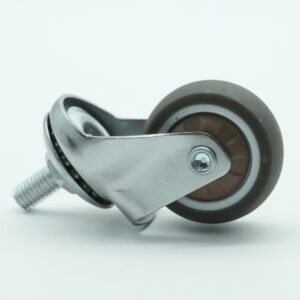
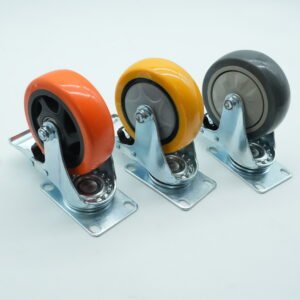
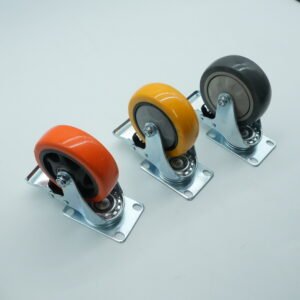
Stainless Steel Casters — Food Grade & Corrosion Resistant Caster Wheels
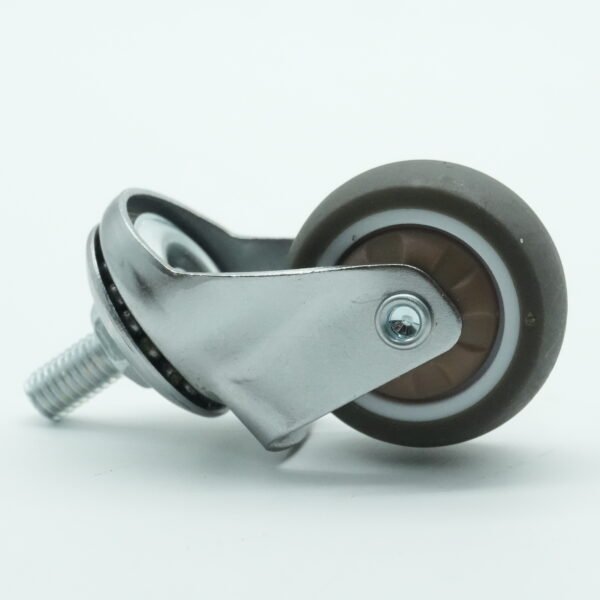
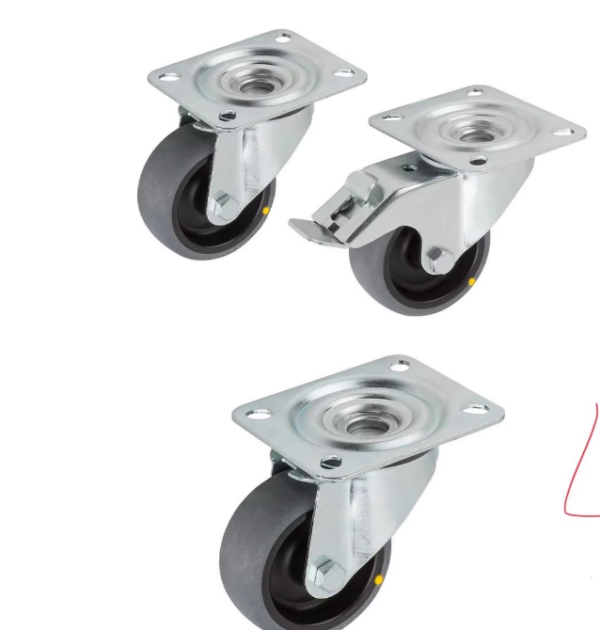
A stainless steel caster is a wheel assembly with a stainless steel frame, top plate, fasteners, and bearing components — engineered for environments where standard zinc-plated steel casters would rust, corrode, or fail hygiene audits. Stainless steel construction is the standard specification for food processing plants, pharmaceutical production, hospitals, marine equipment, chemical handling, and any wash-down environment where casters are regularly exposed to water, steam, cleaning agents, salt, or acidic / alkaline solutions.
C&C Panel manufactures stainless steel casters in both AISI 304 and AISI 316 grades, across the full range of wheel materials and configurations. Every component — top plate, kingpin, raceway, ball bearings, brake mechanism, fasteners — is stainless steel. No mild steel parts are hidden behind plating or coatings to fail prematurely under wash-down.
This page covers the complete C&C Panel stainless steel caster range. For standard zinc-plated industrial casters, see our swivel caster series.
| Industrial Caster Technical Specifications | |
| Parameter | Range |
| Frame material | AISI 304 or AISI 316 stainless steel |
| Load capacity (per caster) | 50 – 500 kg |
| Wheel diameter | 50 mm – 200 mm |
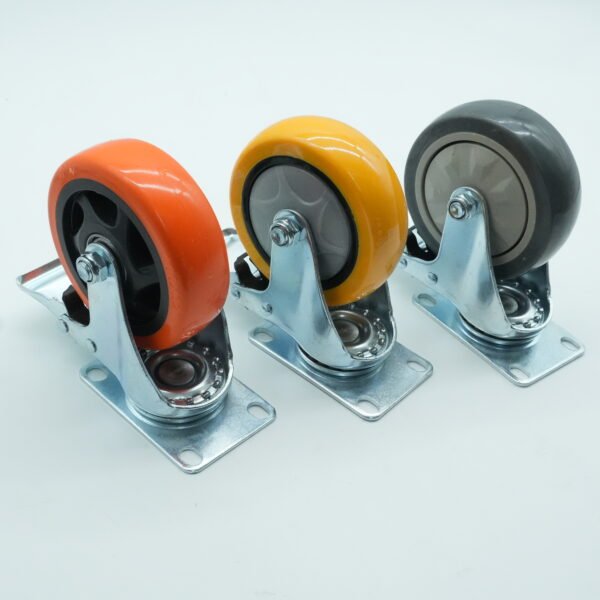
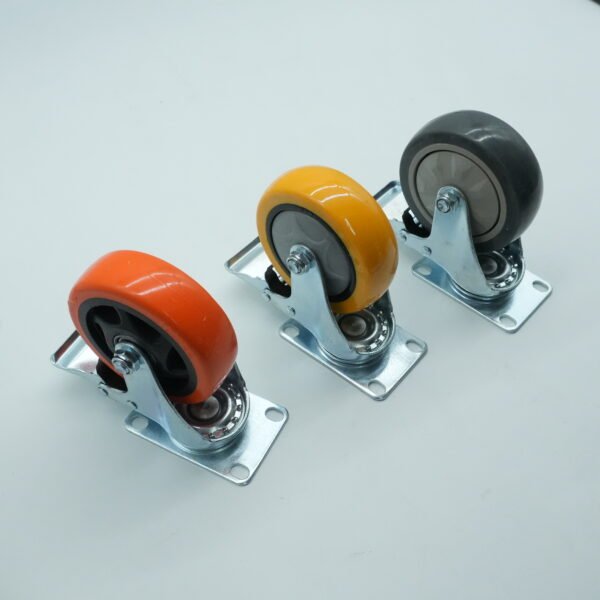
| Wheel materials | Stainless steel, Polyurethane (PU), Nylon, Rubber, TPR, PP |
| Configuration | Swivel (360°) / Rigid / Swivel with brake |
| Brake options | No brake / Top lock / Total lock |
| Mounting | Top plate or threaded stem (stainless steel) |
| Bearing | Stainless steel ball bearing (sealed option available) |
| Operating temperature | -40°C to +280°C (material dependent) |
| Hygiene standards | FDA-compliant wheel options available, EHEDG-compatible design |
| Compliance | REACH, RoHS, FDA (on request) |
304 vs 316 Stainless Steel — Which Grade Do You Need?
The single most important decision when specifying a stainless steel caster is the grade of stainless steel. Choosing the wrong grade either wastes budget or causes premature corrosion failure.
AISI 304 Stainless Steel
Best for: Indoor food processing, commercial kitchens, bakeries, dairies, breweries, light pharmaceutical, hospitals, cleanrooms, indoor wash-down environments.
304 stainless (also called 18/8 — 18% chromium, 8% nickel) is the workhorse grade. It resists corrosion from water, steam, most cleaning agents, and mild acids. It handles daily wash-down with hot water and standard sanitizers without pitting. For 90% of food and pharmaceutical applications, 304 is the correct and most cost-effective specification.
- Corrosion resistance: Excellent against water, steam, mild acids, common sanitizers
- Cost: Standard
- Magnetic: Slightly magnetic after cold-forming, generally considered non-magnetic
AISI 316 Stainless Steel
Best for: Marine environments, coastal facilities, chlorinated environments, chemical processing, offshore equipment, saltwater exposure, heavy pharmaceutical, aggressive cleaning chemicals.
316 stainless adds 2–3% molybdenum to the 304 formula, dramatically increasing resistance to chlorides — the single most aggressive corrosion agent for stainless steel. Anywhere salt, seawater, chlorine bleach, or strong acids are present, 316 is the mandatory specification. The cost premium over 304 is roughly 25–40%, but a 304 caster in a marine or chlorinated environment will fail in months while 316 lasts years.
- Corrosion resistance: Superior, especially against chlorides and salt
- Cost: 25–40% premium over 304
- Magnetic: Non-magnetic
Quick rule: Indoor + freshwater + standard sanitizer = 304. Outdoor / marine / chlorine / strong chemical = 316.
Wheel Material Options
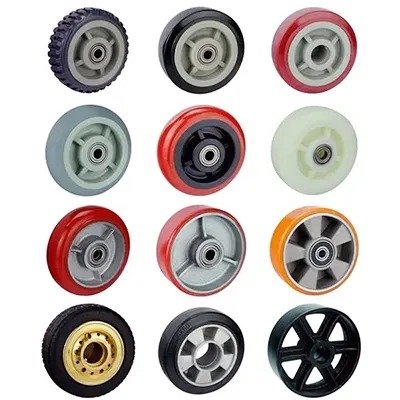
Stainless steel refers to the frame and hardware. The wheel itself can be specified in multiple materials depending on floor surface and load:
Stainless steel wheels — for autoclaves, ovens, and high-temperature wash-down (up to 280°C). Maximum durability, lowest noise control.
Polyurethane (PU) wheels on stainless frame — the most popular configuration. Quiet operation, floor-friendly, no marking, FDA-compliant PU grades available for direct food contact areas.
Nylon wheels on stainless frame — high load capacity, easy to clean, excellent for general food and pharmaceutical use.
TPR (thermoplastic rubber) wheels — soft, quiet, shock-absorbing. Specified for hospital equipment and laboratory carts where vibration must be minimized.
Rubber wheels — for shock-sensitive loads, but limited service life in wash-down environments.
PP (polypropylene) wheels — for acidic / alkaline chemical environments where the wheel itself must resist chemical attack.
Load Capacity & Configuration
C&C Panel stainless steel casters cover the full B2B load range:
| Class | Per-Caster Load | Wheel Diameter | Typical Use |
|---|---|---|---|
| Light-duty | 50 – 120 kg | 50 – 100 mm | Lab carts, food service trolleys, hospital instrument carts |
| Medium-duty | 120 – 300 kg | 100 – 150 mm | Food processing carts, pharmaceutical mixing tanks, hospital beds |
| Heavy-duty | 300 – 500 kg | 150 – 200 mm | Industrial wash-down equipment, chemical drum carts, marine equipment |
Each load class is available in three configurations: swivel (360° steering), rigid (straight-line stability), and swivel with brake. A typical food-processing cart uses two rigid stainless casters at the front and two swivel-with-total-lock casters at the rear.

Application Scenarios
Food Processing & Commercial Kitchens
Daily wash-down with hot water, caustic detergents, and sanitizers destroys standard zinc-plated casters within months. 304 stainless steel casters with PU or stainless wheels are the industry standard. FDA-compliant PU wheel compounds are available for areas where the wheel may contact food-handling surfaces.
Pharmaceutical & Cleanroom
Pharmaceutical GMP requires equipment that can be cleaned and validated without contaminating the production environment. Stainless steel casters with sealed bearings, smooth weld surfaces, and minimal crevices (hygienic design) prevent bacterial harborage. C&C Panel offers EHEDG-compatible designs for Grade A/B cleanrooms.
Hospital & Medical
Hospital infection-control protocols require equipment that survives daily disinfection with chlorine-based sanitizers. 316 stainless steel is recommended where chlorine exposure is frequent. Total-lock brakes are standard on hospital beds, surgical equipment, and IV stands to prevent drift during patient handling.
Marine & Coastal Facilities
Salt air and seawater corrode 304 stainless within 6–18 months. 316 stainless is mandatory for shipboard equipment, dock carts, offshore platform tooling, and any facility within 5 km of the coast. C&C Panel marine-grade casters use 316 frame, 316 fasteners, and sealed bearings to prevent salt intrusion.
Chemical Processing
For acid, alkali, or solvent handling, the caster must resist both the chemical and the splash zone. 316 stainless frame + PP wheels is the standard combination for general chemical handling. For concentrated acids, consult our engineering team for specialty grades.
Cold Storage & Freezer Rooms
Standard caster grease freezes below -20°C and the bearing seizes. C&C Panel cold-storage stainless casters use low-temperature grease rated to -40°C and nylon wheels that remain flexible at sub-zero temperatures.
Outdoor & Wash-Down Equipment
Pressure-washed equipment, outdoor catering, mobile water tanks, and similar applications all require stainless steel construction. Specify 304 for general outdoor use, 316 if coastal or chlorinated.
Hygienic Design Features
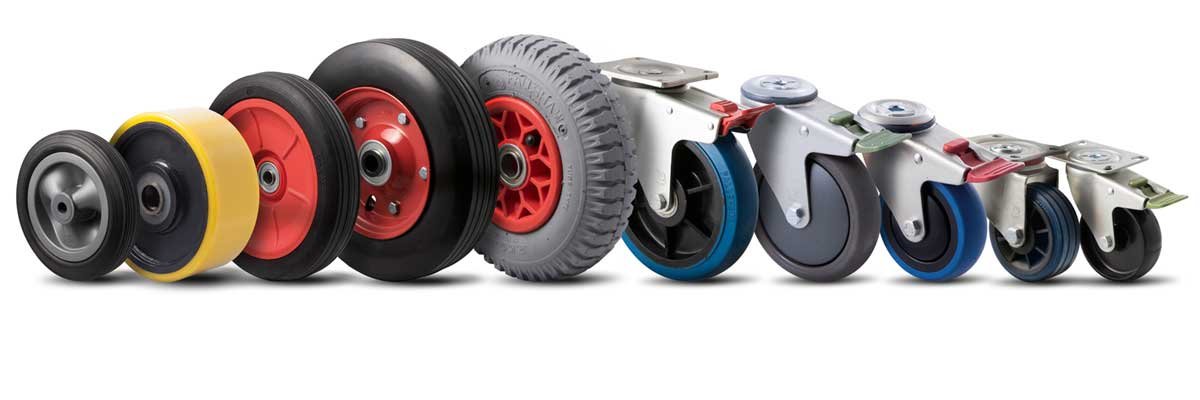
For food and pharmaceutical applications, the frame design matters as much as the material. C&C Panel hygienic stainless steel casters incorporate:
- Smooth, continuous welds — no crevices for bacterial harborage
- Sealed bearings — prevent water and contaminant ingress
- Open frame design — allows cleaning agents to flush all surfaces
- Polished finish — Ra ≤ 0.8 μm available on request for Grade A pharmaceutical applications
- No mild-steel hidden components — every fastener, washer, and bearing race is stainless
- FDA-compliant wheel compounds — for direct food-contact zones
These features add to the manufacturing cost but are non-negotiable for facilities under HACCP, GMP, or EHEDG audit.

Why Choose C&C Panel Stainless Steel Casters
Full stainless construction — no hidden mild steel. Every component including kingpin, raceway, brake, and fasteners is genuine 304 or 316 stainless. We do not substitute plated steel parts to reduce cost. This is the difference between a caster that lasts 3+ years in wash-down and one that fails in 6 months.
Material certificates on request. Mill certificates for 304 / 316 stainless are available with every export order. Critical for pharmaceutical, marine, and regulated industries where material traceability is required.
Both grades stocked. 304 and 316 available across the full product range. No need to source 316 from a separate specialty supplier.
Custom configurations. Top plate dimensions, bolt patterns, wheel material combinations, and brake configurations are customizable for OEM and project orders. Hygienic design upgrades (polished finish, sealed bearings, continuous welds) available on request.
Export-ready compliance. REACH, RoHS, FDA (wheel material), and load test reports available for each grade. Experienced shipping to food processors, pharmaceutical plants, and marine operators across North America, Europe, Southeast Asia, Middle East, and Australia.
Frequently Asked Questions
Q: What is a stainless steel caster? A stainless steel caster is a wheel assembly with the frame, top plate, kingpin, bearings, and fasteners made of stainless steel (typically AISI 304 or 316). It is designed for environments where standard zinc-plated casters would rust or fail — food processing, pharmaceuticals, marine, chemical, and wash-down applications.
Q: What is the difference between 304 and 316 stainless steel casters? 304 stainless is the standard grade for indoor food, pharmaceutical, and general wash-down use. 316 stainless adds molybdenum for superior resistance to chlorides — required for marine environments, chlorinated cleaning, salt exposure, and aggressive chemicals. 316 costs 25–40% more but is mandatory wherever chlorides are present.
Q: Are stainless steel casters food grade? The stainless steel frame meets food-contact standards when properly cleaned. For the wheel, specify FDA-compliant PU or stainless steel wheels in zones where the caster may contact food or food-handling surfaces. C&C Panel offers FDA-compliant wheel compounds on request.
Q: Are stainless steel casters waterproof? Stainless steel frames resist corrosion from water, steam, and most cleaning agents indefinitely. For full wash-down rating (IP-rated bearings), specify sealed bearings — these prevent water from reaching the lubricant and causing bearing failure. Standard open bearings will eventually fail under continuous wash-down even with stainless frames.
Q: How much weight can a stainless steel caster hold? C&C Panel stainless steel casters carry from 50 kg (light-duty) up to 500 kg (heavy-duty) per caster. For higher loads, consult our engineering team for custom configurations.
Q: Are stainless steel casters magnetic? 316 stainless is non-magnetic. 304 stainless is technically non-magnetic but becomes slightly magnetic after cold-forming (the manufacturing process used for caster components). For applications requiring fully non-magnetic equipment — MRI rooms, sensitive electronics — specify 316.

Reviews
There are no reviews yet.